


Kafka Streams is useful when a Java service needs to process events continuously, not just consume messages one by one. The hard part is knowing when the API is the right fit: it shines for topologies, joins, windows, and stateful processing, but it also adds operational concerns around partitions, rebalancing, RocksDB, and changelog topics.
Quick takeaway: Use Kafka Streams when the stream processing logic belongs inside an application service and the source of truth is already Kafka. If you need SQL analytics, multi-language jobs, or a separate managed processing plane, compare it with ksqlDB, Flink, Spark Structured Streaming, or a custom consumer service.
What Is Kafka Streams API?
Kafka Streams is a client library in the Apache Kafka ecosystem. It lets a Java application read records from Kafka topics, transform or aggregate them, maintain local state, and write results to other Kafka topics. The application is still your service: you deploy it, scale it, monitor it, and version its topology.
The official Kafka Streams documentation describes the API as a stream processing library built on top of Kafka. That distinction matters. Kafka brokers store and replicate the data; Kafka Streams applications run the processing logic.
| Layer | What it does | Operational owner |
|---|---|---|
| Kafka broker cluster | Stores input, output, repartition, and changelog topics. | Kafka platform team or managed Kafka provider |
| Kafka Streams application | Runs the topology and processes records. | Application or platform team |
| State store | Keeps local state such as aggregates or tables. | Application instance, backed by Kafka changelog topics |
| Consumer group protocol | Assigns partitions and stream tasks across instances. | Kafka plus the running app instances |
When Should You Use Kafka Streams?
Kafka Streams is a good default when the processing logic is close to an application domain and your team already uses Java or the JVM. For example, a fraud scoring service can join payment events with account state, calculate rolling risk counters, and emit scored events without running a separate stream-processing cluster.
- Use it for event enrichment, filtering, joins, aggregations, deduplication, rolling counters, and materialized views.
- Prefer a plain Kafka consumer when the job only reads a topic, calls one service, and writes a result.
- Prefer Flink or Spark when the organization needs a larger analytics-style processing platform, non-JVM workloads, or complex batch-plus-stream jobs.
- Prefer ksqlDB when SQL-based stream transformations are the team’s main interface.
If your first task is simply connecting a Java service to Kafka, start with the related guide on connecting to Kafka using Java. Kafka Streams builds on the same broker and client basics, but it adds a topology layer and state management.
How Does a Kafka Streams Topology Work?
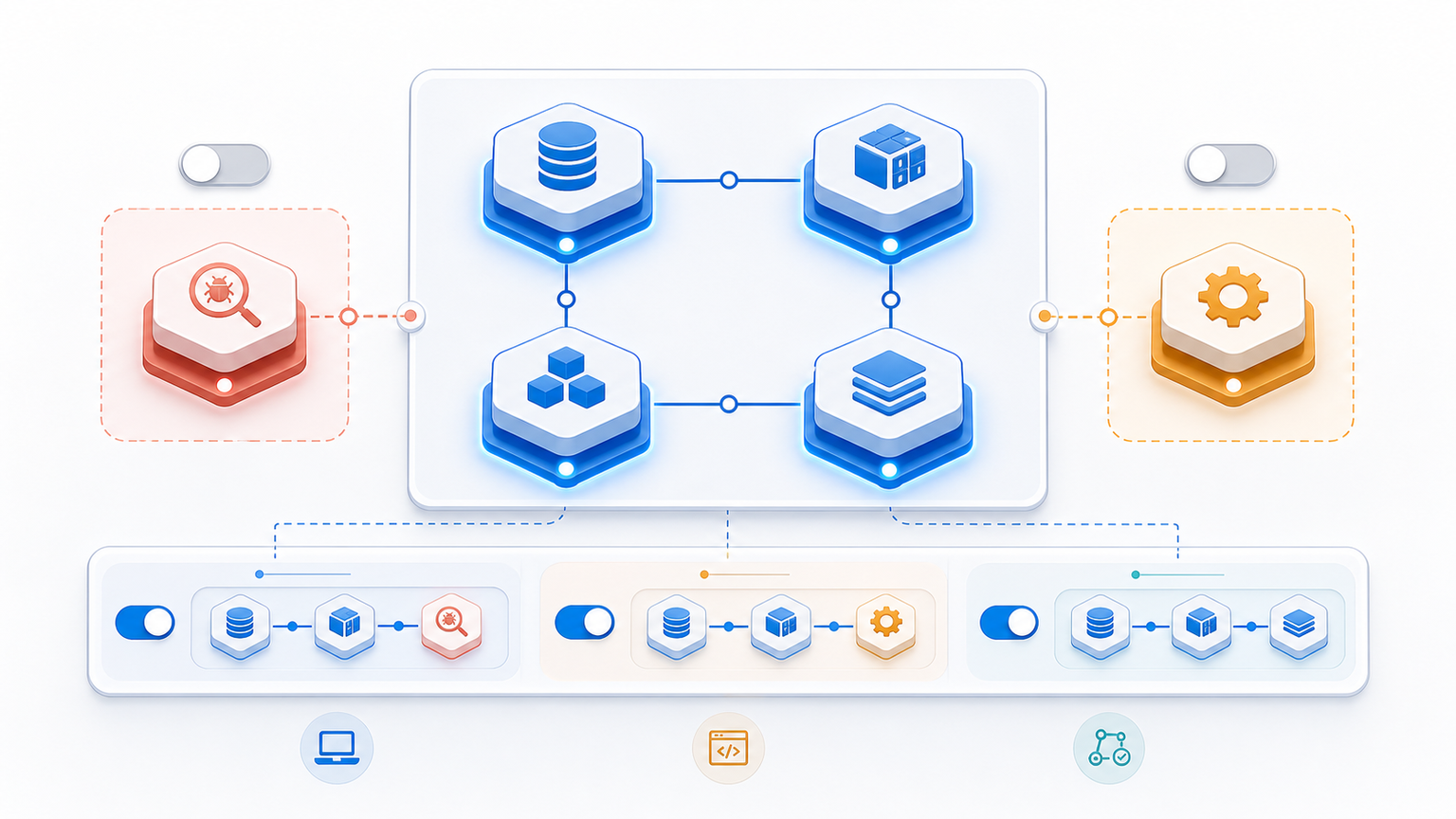
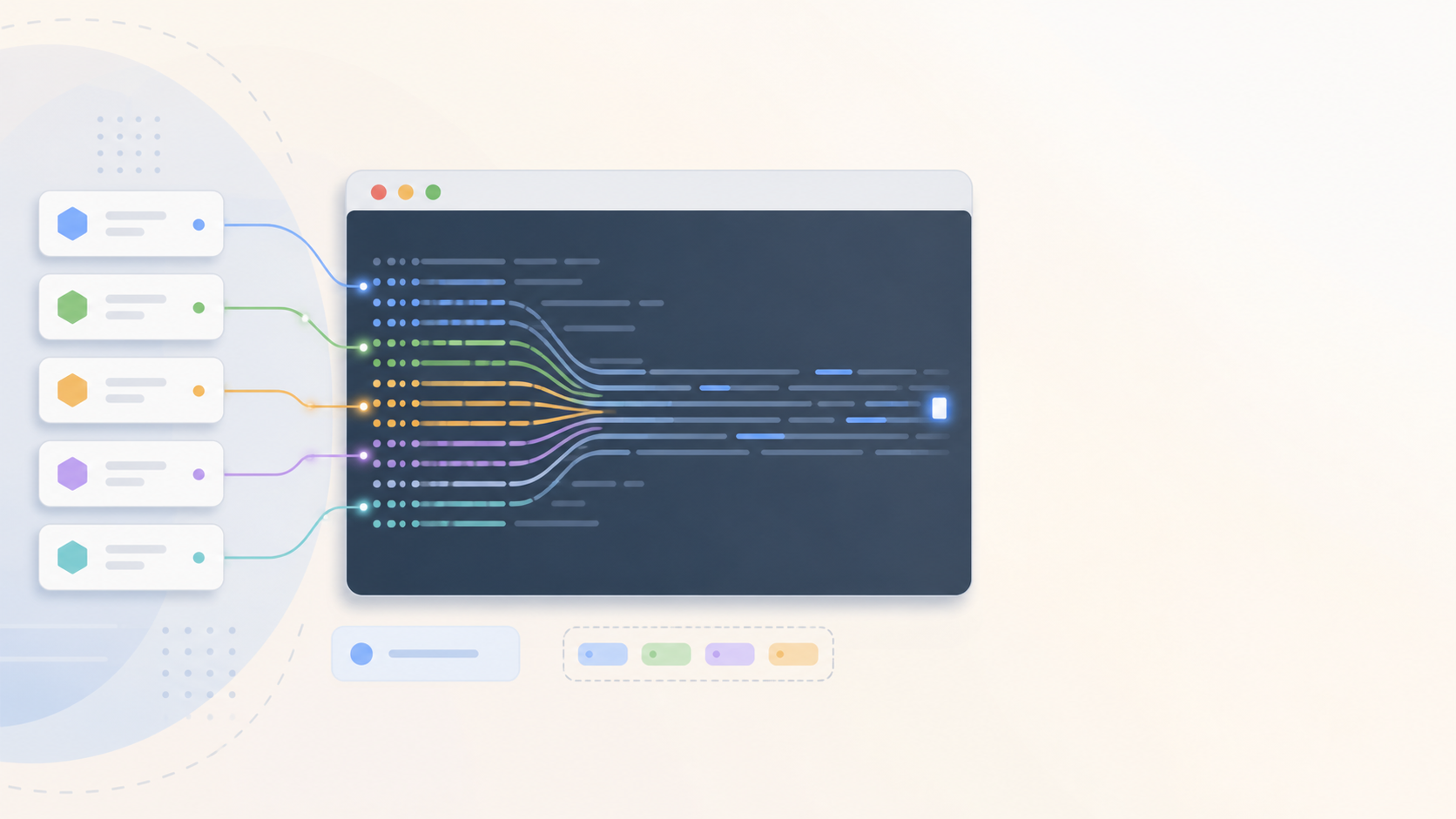
A topology is the processing graph. Source nodes read records from topics, processor nodes transform or join records, and sink nodes write output. The high-level DSL covers common operations such as map, filter, groupBy, aggregate, join, and windowed counts. The lower-level Processor API gives more control when the DSL is not enough.
StreamsBuilder builder = new StreamsBuilder();

KStream<String, Order> orders = builder.stream("orders");

KStream<String, OrderEvent> validated = orders
    .filter((orderId, order) -> order.total() > 0)
    .mapValues(order -> new OrderEvent(order.id(), order.total(), "validated"));

validated.to("validated-orders");

KafkaStreams streams = new KafkaStreams(builder.build(), streamsConfig);
streams.start();Code language: JavaScript (javascript)
This example is stateless: every input record is checked and transformed independently. Stateless topologies are the easiest to operate because they do not need local state restoration after a restart.
What Changes When the Topology Is Stateful?
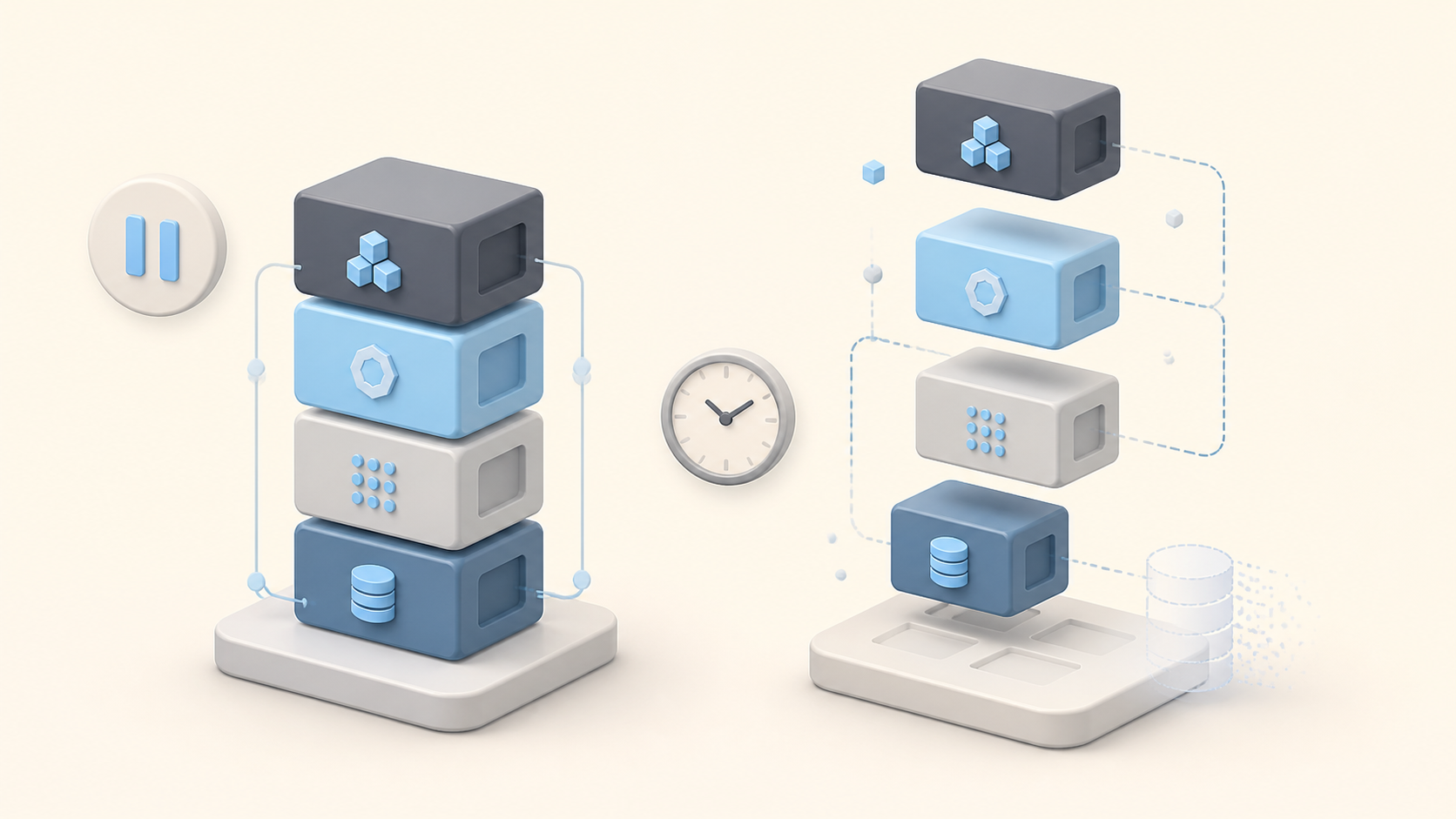
Stateful operations include joins, aggregations, windowed counts, and table materialization. Kafka Streams stores local state on each application instance and backs that state with changelog topics in Kafka. This is how another instance can restore state if a task moves after a rebalance.
KTable<Windowed<String>, Long> orderCounts = builder
    .stream("orders", Consumed.with(Serdes.String(), orderSerde))
    .groupByKey()
    .windowedBy(TimeWindows.ofSizeWithNoGrace(Duration.ofMinutes(5)))
    .count(Materialized.as("orders-per-five-minutes"));

orderCounts
    .toStream()
    .to("order-counts", Produced.with(windowedStringSerde, Serdes.Long()));Code language: JavaScript (javascript)
The state store name, window size, and changelog behavior are now part of the production design. Treat them like database schema decisions, not incidental application code.
Kafka Streams vs Plain Consumers vs Flink
The right choice depends less on feature lists and more on ownership. Kafka Streams makes sense when the team that owns the service can also own the processing topology. A separate stream processing platform makes sense when the organization wants centralized job management, language flexibility, or advanced event-time processing across many teams.
| Option | Best fit | Watch out for |
|---|---|---|
| Plain Kafka consumer | Simple message handling, validation, or service calls. | Custom state, retries, and partition handling grow quickly. |
| Kafka Streams | JVM app with joins, aggregations, windows, and local state. | State stores, rebalancing, changelog topics, and topology versioning. |
| ksqlDB | SQL-style transformations over Kafka topics. | Less natural for application-specific Java code paths. |
| Flink or Spark Streaming | Dedicated stream processing platform or complex analytics jobs. | More infrastructure and operational ownership. |
What Are State Stores and Changelog Topics?
A state store is local storage used by a Kafka Streams task. Many deployments use RocksDB under the hood for durable local state. Kafka Streams also writes changes to changelog topics so a task can rebuild state after failover, redeployment, or partition reassignment.
The Kafka state store documentation is worth reading before shipping a stateful topology. In practice, state stores create disk, retention, restore-time, and backup questions that a stateless service does not have.
- Size disks for the largest expected local state plus restore overhead.
- Monitor restore time after deployments and broker incidents.
- Name state stores deliberately so changelog topics stay understandable.
- Avoid unbounded aggregations unless retention and compaction are intentional.
How Do You Configure a Kafka Streams Application?
A Streams app needs the usual Kafka connection settings plus an application id. The application id is important because it becomes the consumer group id and prefixes internal topics. Changing it creates a new processing application from Kafka’s perspective.
Properties props = new Properties();
props.put(StreamsConfig.APPLICATION_ID_CONFIG, "orders-streams-v1");
props.put(StreamsConfig.BOOTSTRAP_SERVERS_CONFIG, "kafka-1:9092,kafka-2:9092");
props.put(StreamsConfig.DEFAULT_KEY_SERDE_CLASS_CONFIG, Serdes.String().getClass());
props.put(StreamsConfig.DEFAULT_VALUE_SERDE_CLASS_CONFIG, SpecificAvroSerde.class);
props.put(StreamsConfig.PROCESSING_GUARANTEE_CONFIG, StreamsConfig.EXACTLY_ONCE_V2);
props.put(StreamsConfig.NUM_STREAM_THREADS_CONFIG, 2);Code language: JavaScript (javascript)
Start with a stable application id, explicit serdes, clear topic naming, and enough partitions to scale. The Kafka Streams configuration reference covers the full property list.
What Can Go Wrong in Production?
Most Kafka Streams incidents come from treating it like ordinary stateless code. The topology is application code, but its behavior depends on topic partitions, consumer group membership, local disks, serialization, and state restoration.
| Failure mode | Typical symptom | Practical fix |
|---|---|---|
| Too few partitions | Adding app instances does not increase throughput. | Partition input topics for the expected parallelism before traffic grows. |
| Serde mismatch | Records fail during deserialization after a deploy. | Version schemas and test compatibility before rollout. |
| Long state restore | Instances stay unhealthy or lag after restart. | Track restore metrics, size state stores, and avoid unbounded state. |
| Rebalance churn | Latency spikes during deployments or unstable instances. | Use rolling deploys, avoid slow processing loops, and tune group stability carefully. |
| Internal topic surprise | Unexpected repartition or changelog topics appear. | Review the topology description and internal topic naming before production. |
How Do You Inspect the Topology Before Shipping?
The topology description shows sources, processors, state stores, repartition topics, and sinks. Add it to build logs or deployment notes so reviewers can catch accidental repartitioning or unexpected stateful steps.
Topology topology = builder.build();
System.out.println(topology.describe());
For larger teams, this topology output is similar to an infrastructure plan: it shows what the service will create and depend on. That is especially useful when platform teams review Kafka changes.
What Is a Practical Production Checklist?
Before putting a Kafka Streams application in front of important events, check the processing model, state model, and deployment model together. This is where Kafka Streams work overlaps with broader DevOps operating patterns: the application, infrastructure, and observability plan have to match.
- Define input, output, repartition, and changelog topic names before launch.
- Choose partition counts based on expected parallelism, not today’s test data.
- Set a stable application id and plan what happens if it changes.
- Document state stores and restore expectations.
- Add lag, processing latency, error-rate, rebalance, and restore metrics.
- Test schema evolution and bad-record handling.
- Run rolling deployment tests with realistic traffic.
- Decide when to reset application state and who is allowed to do it.
For data-oriented teams, Kafka Streams often sits between application engineering and data engineering. The career and responsibility split is different from team to team, which is why related role pages such as DevOps vs data engineer salary can also help frame who owns the pipeline in practice.
FAQ
These are the questions that usually decide whether Kafka Streams is the right tool for a service or whether the team should keep the design simpler.
Is Kafka Streams the same as Apache Kafka?
No. Apache Kafka is the distributed event log and broker layer. Kafka Streams is a Java client library that reads from Kafka topics, processes records, keeps local state when needed, and writes results back to Kafka.
When should I use Kafka Streams instead of a consumer service?
Use Kafka Streams when the service needs stream joins, aggregations, windows, repartitioning, or fault-tolerant local state. A plain consumer is enough for simple read-transform-write work with little or no state.
Does Kafka Streams need a separate cluster?
No. Kafka Streams runs inside your own JVM application. The Kafka cluster stores input topics, output topics, repartition topics, and changelog topics, while your app instances do the processing.
How does Kafka Streams handle failures?
Kafka Streams uses consumer group rebalancing, committed offsets, and changelog-backed state stores. After a restart or instance loss, another task can restore state from changelog topics and continue processing.
What is the biggest production mistake with Kafka Streams?
The common mistake is treating it like stateless application code. Stateful topologies need explicit topic design, enough partitions, changelog retention, RocksDB disk planning, and careful handling of rebalances and late records.
Final Takeaway
Kafka Streams is best understood as application-owned stream processing for Kafka-native systems. It is powerful when your service needs state, joins, and continuous transformations, but it is not “just another consumer.” Plan the topology, partitions, state stores, changelog topics, and operational ownership before production traffic depends on it.
Primary references used for this refresh: Apache Kafka Streams docs, Kafka Streams developer guide, core concepts, DSL API guide, Processor API guide, and Streams configuration reference.

Leave a Reply