kubectl logs reads container output from a pod, and with the right flags it streams live logs from several pods at once. The catch is that kubectl logs has no --all-namespaces flag, and following multiple pods only works through a label selector or a workload resource. This guide covers the commands for single pods, label-selected sets, workload resources, init containers, and crashed pods, plus when a dedicated tool like stern is the better choice.
TL;DR: Use
kubectl logs <pod> -fto follow one pod,kubectl logs -l app=api -fto follow a label-selected set, and--all-pods=trueon a workload resource (kubectl 1.31+). There is no--all-namespacesflag; for cross-namespace tailing use a namespace loop or stern.
kubectl logs Basics: One Pod, One Container
kubectl logs prints the logs a container wrote to stdout and stderr. The simplest call targets a pod in the current namespace:
kubectl logs web-1Code language: Bash (bash)For a pod with several containers, add -c. Without it, kubectl selects the first container and prints which one it defaulted to:
kubectl logs web-1 -c app
# Defaulted container "app" out of: [app sidecar]Code language: Bash (bash)
Common single-pod flags:
| Flag | Effect |
|---|---|
--tail=N | Last N lines. Default -1 (all lines) for a pod; 10 lines per pod with -l |
--since=1h | Lines written in the last hour |
--timestamps | Prefix each line with a timestamp |
--limit-bytes=N | Max bytes to read |
-n, --namespace | Namespace of the pod |
--max-log-requests=N | Max concurrent log streams, default 5 |
Follow Live Output with -f and –tail
-f (or --follow) streams new lines as the container writes them. Combine it with --tail so you see recent history first:
kubectl logs -f --tail=100 web-1Code language: Bash (bash)For a workload resource, kubectl resolves it to one pod. A Deployment follows its current pod:
kubectl logs -f --tail=100 deployment/apiCode language: Bash (bash)Follow Multiple Pods with a Label Selector
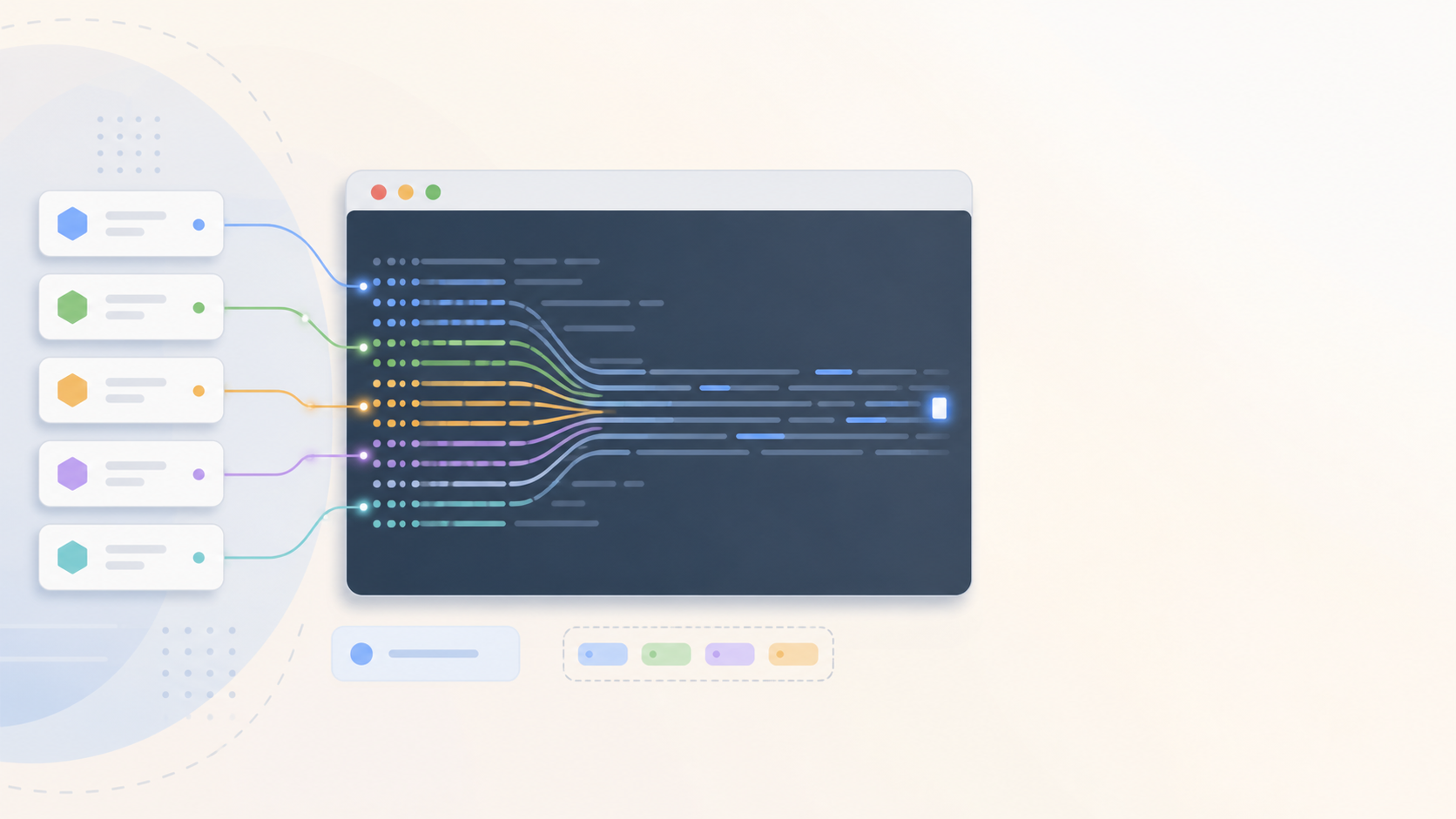
To stream logs from every pod that matches a label, use -l. kubectl then opens one stream per pod, up to --max-log-requests (5 by default):
kubectl logs -l app=api -fCode language: Bash (bash)When several pods share a stream, add --prefix so each line shows which pod it came from:
kubectl logs -l app=api -f --prefixCode language: Bash (bash)If you follow more pods than the concurrency limit allows, kubectl errors out:
Error from server: you are attempting to follow 8 log streams, but maximum allowed concurrency is 5, use –max-log-requests to increase the limitRaise the limit explicitly:
kubectl logs -l app=api -f --max-log-requests=20Code language: Bash (bash)The -l selector cannot be combined with a pod or resource name. Trying it produces:
Workload Resources and –all-pods
By default, a workload resource resolves to a single pod. From kubectl 1.31 you can stream all pods of a Deployment with --all-pods=true; this forces --prefix on:
kubectl logs deployment/api --all-pods=true -fCode language: Bash (bash)The –all-namespaces Flag Does Not Exist
There is no -A or --all-namespaces on kubectl logs. The proposal for it was never merged, and the flag is absent from kubectl 1.10 through 1.35 and current master. A selector still runs in one namespace, so the working pattern is a per-namespace loop:
for ns in $(kubectl get ns -o name | cut -d/ -f2); do
  kubectl logs -n "$ns" -l app=api -f --prefix --max-log-requests=10
doneCode language: Bash (bash)
Multi-Container Pods and Init Containers
For a pod with sidecars, select the container explicitly:
kubectl logs web-1 -c sidecar -fCode language: Bash (bash)To include all containers, init containers, and ephemeral containers in one call:
kubectl logs web-1 --all-containers=true -fCode language: Bash (bash)Init containers are debugged with the same syntax. Add --previous to read the run that failed before a restart:
kubectl logs web-1 -c init-migrate --previousCode language: Bash (bash)Read the Last Run with –previous
--previous reads the logs of the previous, terminated container instance. This is the fastest way to see why a pod keeps crashing:
kubectl logs web-1 --previousCode language: Bash (bash)If there is no previous instance, kubectl says so plainly:
Error from server (BadRequest): previous terminated container “app” in pod “web-1” not foundstern and kail for Production Log Tailing
For interactive debugging across many pods, kubectl one-liners get long. Two dedicated tools do this better:
| Tool | Approach | Multi-namespace | Install |
|---|---|---|---|
| stern | Regex or label query, color-coded, auto-restarts on pod churn | Yes (stern . -A) | brew install stern or kubectl krew install stern |
| kail | Match by label, service, deployment, or pod; no args means whole cluster | Yes | brew install kail |
Stream everything in a namespace with stern:
stern . -n productionCode language: Bash (bash)Common Errors
| Error | Cause | Fix |
|---|---|---|
only a selector (-l) or a POD name is allowed | Combined -l with a pod/resource name | Pick one: selector or name |
you are attempting to follow N log streams... | More pods than --max-log-requests (5) | Add --max-log-requests |
previous terminated container ... not found | No previous instance exists | Check the pod was actually restarted |
Error from server (NotFound): pods "x" not found | Wrong namespace or pod name | Add -n or list pods first |
Defaulted container "app" out of: [app sidecar] | No -c on a multi-container pod | Pass -c explicitly |
FAQ
Can kubectl logs follow multiple pods at once?
Yes, with a label selector. `kubectl logs -l app=api -f` opens one stream per matching pod, up to the concurrency limit set by `–max-log-requests` (5 by default), and `–prefix` labels each line with its pod so you can tell the streams apart.
Does kubectl logs have –all-namespaces?
No. The `–all-namespaces` flag was proposed for kubectl logs but never merged, so it is absent from kubectl 1.10 through 1.35 and current master. Use a `-l` selector per namespace, a namespace loop, or stern with its `-A` flag for cross-namespace tailing.
Why does kubectl logs show only one pod for a Deployment?
By default a workload resource such as a Deployment resolves to a single pod, and kubectl picks it with a preference for running, ready pods. From kubectl 1.31 you can stream every pod of the resource with `–all-pods=true`, which forces `–prefix` on so each line shows its pod.
How do I see the logs of a crashed container?
Use `kubectl logs –previous`. It reads the previous, terminated container instance, which is where the crash output lives. If no previous instance exists, kubectl returns `previous terminated container “app” in pod “web-1” not found`.
What is the difference between kubectl logs and stern?
kubectl logs is the built-in command for one pod, container, or label-selected set, with a 5-stream concurrency default. stern is a dedicated tailing tool with regex matching, color-coded output, multi-namespace `-A`, and automatic reconnection when pods restart, which makes it better for production debugging.