

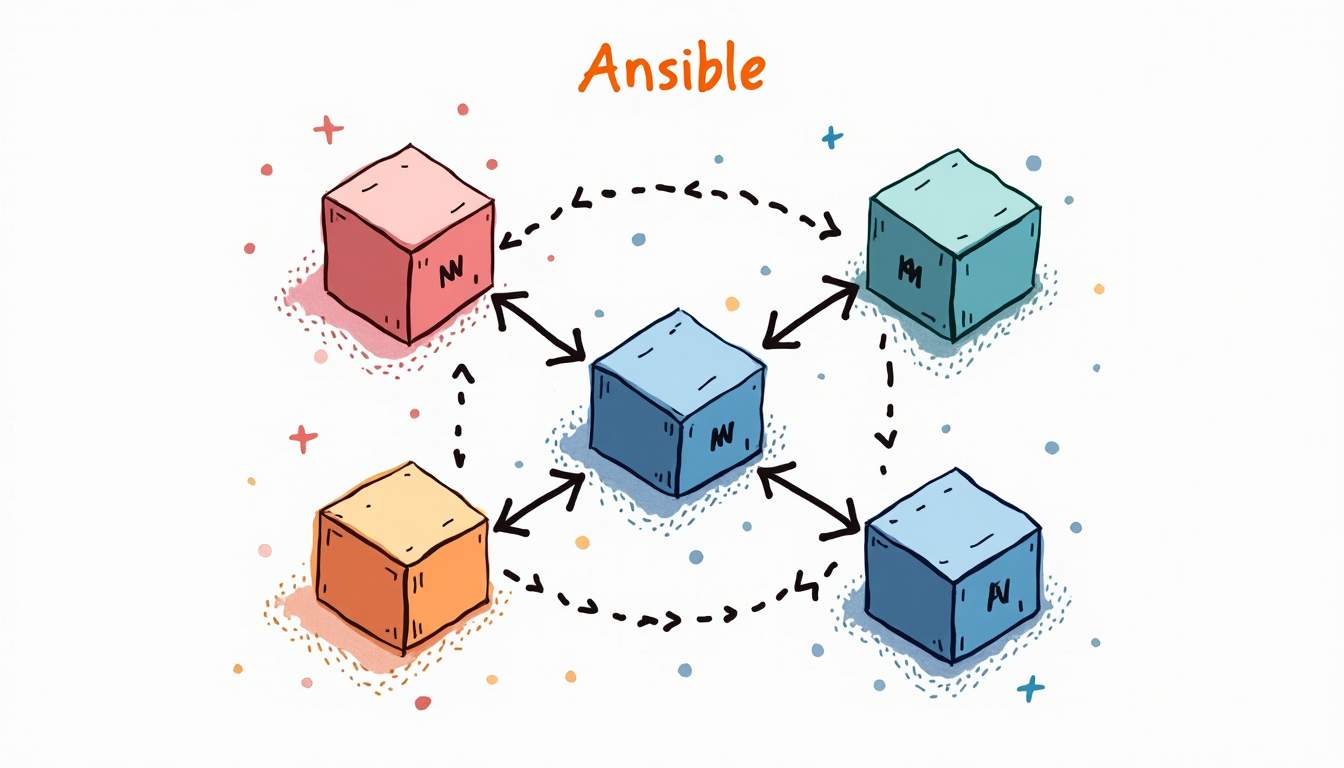
Ansible roles are the point where a useful playbook becomes reusable automation. A playbook can install Nginx on one group of servers. A role can package the same work so several teams can apply it across staging, production, cloud images, and CI test environments without copying the same tasks again.
Quick takeaway: use an Ansible role when a playbook has a repeatable responsibility, such as configuring a service, managing users, deploying an agent, or applying a baseline. Keep one role focused on one job; use playbooks to decide where and when that role runs.
This guide is narrower than a general Ansible tutorial or an interview question list. If you are preparing for Q&A, start with our Ansible interview questions. If you need one-off checks, use Ansible ad hoc commands or Ansible ping. Here, the focus is role structure, reuse, and production maintenance.
What Is an Ansible Role?
An Ansible role is a standardized directory layout for reusable automation content. The official Ansible documentation describes roles as a way to load related variables, tasks, files, templates, handlers, and other artifacts automatically from a known structure. In practice, a role is a small automation package with a clear boundary.
Instead of putting every task inside one large playbook, you move a repeatable responsibility into a role and call that role from a playbook. The playbook stays readable: it defines inventory targets, privilege escalation, and orchestration order. The role owns the implementation details.
| Use a playbook when… | Use a role when… |
|---|---|
| You are orchestrating hosts, order, and one-off workflow. | You are packaging repeatable configuration logic. |
| The automation is specific to one environment or migration. | The same logic will be reused across services or environments. |
| You need a short runbook for one task. | You need defaults, templates, handlers, files, and tests around a component. |
| You want to glue several roles together. | You want one focused responsibility such as Nginx, Docker, users, or monitoring agents. |
Standard Ansible Role Directory Structure
Ansible roles work because the layout is predictable. You do not need every directory in every role, but using the standard names keeps the role easy to read and easy to share. Ansible documents this layout in its roles guide.
roles/
  webserver/
    defaults/
      main.yml
    vars/
      main.yml
    tasks/
      main.yml
    handlers/
      main.yml
    templates/
      nginx.conf.j2
    files/
      index.html
    meta/
      main.yml
README.md| Directory | Purpose | Production note |
|---|---|---|
tasks/ | Main work the role performs. | Keep tasks focused and split large flows with include_tasks. |
handlers/ | Actions triggered by notify, such as service restarts. | Use handlers to restart only when config changes. |
defaults/ | Low-precedence variables users can override. | Put safe, documented defaults here. |
vars/ | Higher-precedence role variables. | Use sparingly; they are harder for callers to override. |
templates/ | Jinja2 templates rendered on target hosts. | Use for config files that need variables. |
files/ | Static files copied as-is. | Use for static assets, not generated config. |
meta/ | Role metadata and dependencies. | Keep dependencies explicit and minimal. |
A Minimal Ansible Role Example
A simple webserver role might install Nginx, render a configuration file, and restart the service only when the template changes. This is the basic pattern most production roles grow from.
# roles/webserver/tasks/main.yml
- name: Install Nginx
  ansible.builtin.package:
    name: nginx
    state: present

- name: Render Nginx configuration
  ansible.builtin.template:
    src: nginx.conf.j2
    dest: /etc/nginx/nginx.conf
    mode: "0644"
  notify: Restart Nginx

- name: Ensure Nginx is running
  ansible.builtin.service:
    name: nginx
    state: started
    enabled: trueCode language: PHP (php)
# roles/webserver/handlers/main.yml
- name: Restart Nginx
ansible.builtin.service:
name: nginx
state: restartedCode language: PHP (php)# roles/webserver/defaults/main.yml
nginx_worker_processes: auto
nginx_worker_connections: 1024Code language: PHP (php)The handler matters. Without it, teams often restart a service on every run, even when nothing changed. With notify, the restart happens only when the rendered file changes. That keeps Ansible closer to idempotent infrastructure automation. For more on handlers, see the official Ansible handlers documentation.
How to Call a Role from a Playbook
A role does nothing until a playbook applies it to hosts. The playbook should stay thin: choose the hosts, set any role variables, and list roles in the order they should run.
# site.yml
- name: Configure web servers
  hosts: web
  become: true
  roles:
    - role: webserver
      vars:
        nginx_worker_connections: 2048Code language: PHP (php)
This separation is the main design win. The role knows how to configure the webserver. The playbook knows which servers should receive that configuration. When you later add a load balancer, monitoring agent, or backup role, you compose them in the playbook rather than mixing every task into one file.
When to Turn a Playbook into a Role
Do not turn every small playbook into a role. Roles add structure, and structure has a cost. The useful trigger is reuse or complexity: if you keep copying the same tasks, adding the same variables, or needing the same handler across multiple playbooks, the content probably belongs in a role.
| Signal | What it means | Recommended action |
|---|---|---|
| The same task block appears in 2-3 playbooks. | Copy-paste drift is starting. | Extract a role with clear defaults. |
| The playbook needs templates, files, and handlers. | The logic has become a component. | Create a role so assets live together. |
| Different environments need different settings. | Variables need a stable contract. | Move tunable values to defaults/main.yml. |
| The role would do unrelated jobs. | The boundary is too broad. | Split into smaller roles and compose them in a playbook. |
The official Ansible reuse guide also frames roles as one of several reuse options, alongside task files and playbook imports. A good rule: use task files for small internal reuse, use roles for reusable components with their own variables and assets.
Variables: Defaults vs Vars
Variable placement is where many roles become hard to maintain. Put caller-friendly settings in defaults/main.yml. Those values have low precedence, so inventory, group variables, host variables, or playbook variables can override them. Use vars/main.yml only for values that should rarely change. The Ansible variables documentation is worth bookmarking because precedence mistakes are a common source of confusing runs.
# roles/webserver/defaults/main.yml
nginx_port: 80
nginx_server_name: example.com
nginx_worker_connections: 1024Code language: PHP (php)
# inventory/group_vars/prod.yml
nginx_port: 443
nginx_server_name: app.example.com
nginx_worker_connections: 4096Code language: PHP (php)That pattern gives platform teams a safe baseline while letting production override the settings it needs. If everything goes into vars/, users of the role will fight the role instead of configuring it.
Templates and Files
Use templates/ when the file depends on variables. Ansible renders Jinja2 templates before copying them to the target host. Use files/ when the file should be copied exactly as stored. The distinction keeps configuration flexible without turning every static asset into a template.
# roles/webserver/templates/nginx.conf.j2
worker_processes {{ nginx_worker_processes }};

events {
  worker_connections {{ nginx_worker_connections }};
}

http {
  server {
    listen {{ nginx_port }};
    server_name {{ nginx_server_name }};
  }
}Code language: PHP (php)
If a template becomes full of conditionals, step back. Sometimes the role is trying to support too many deployment models. Split the role or expose a simpler variable contract before the template turns into a second programming language.
Role Dependencies and Ansible Galaxy
Roles can declare dependencies in meta/main.yml, but dependencies should be used carefully. They are useful for small prerequisites, but they can hide execution order from the playbook reader. If the dependency is important to the deployment story, consider listing both roles explicitly in the playbook.
# roles/webserver/meta/main.yml
dependencies:
  - role: common
    vars:
      common_packages:
        - curl
        - ca-certificatesCode language: PHP (php)
For shared roles, Ansible Galaxy and collections provide a distribution path. Galaxy is useful for installing community roles and collections, while internal teams often keep their roles in a Git repository or a private collection. If you compare tools at a higher level, our Ansible vs Puppet guide explains how Ansible fits into the broader configuration-management landscape.
Best Practices for Production Roles
Good roles are boring in the best way. They have a small purpose, clear defaults, predictable handlers, and enough documentation that another engineer can run them without reading every task.
| Practice | Why it helps |
|---|---|
| Give each role one responsibility. | It keeps variables, tests, and failure modes understandable. |
Document variables in README.md. | Users should know what they can override without reading source. |
Prefer defaults/ for tunable settings. | Inventory and playbooks can override cleanly. |
| Use handlers for service reloads and restarts. | Services restart only when the role changes something. |
| Keep role names explicit. | postgres_client is clearer than tools. |
| Test roles in isolation. | You can catch broken templates, missing variables, and non-idempotent tasks earlier. |
For operational workflows, roles should also connect cleanly with other Ansible patterns. You might use Ansible register when a task output controls later work, or compare role-based automation against other options in a DevOps automation tools review.
Common Mistakes
The most common Ansible role mistake is making the role too big. A role called server_setup often grows into users, packages, firewall rules, monitoring, application deployment, and backup logic. That role becomes hard to test and risky to reuse.
A second mistake is hiding environment-specific behavior inside the role. Roles should expose a clean interface through variables. Inventory and playbooks should decide the environment. If a role has too many when: env == "prod" branches, the role is probably carrying orchestration logic that belongs outside it.
A third mistake is skipping documentation. A role without a short README, variable list, and example playbook becomes tribal knowledge. That defeats the point of reusable automation.
FAQ
These are the practical questions teams usually ask when they start moving from playbooks to reusable roles.
What is the difference between an Ansible playbook and a role?
A playbook defines which hosts to target and which automation steps to run. A role packages reusable implementation details such as tasks, defaults, handlers, templates, and files. In production, playbooks usually compose roles.
When should I create an Ansible role?
Create a role when the same automation responsibility is reused across projects, environments, or teams. If the logic needs its own defaults, templates, files, or handlers, it is usually role-worthy.
Should variables go in defaults or vars?
Put user-configurable values in defaults/main.yml because they are easy to override. Use vars/main.yml only for values that should rarely change and should not be part of the normal role interface.
Can Ansible roles depend on other roles?
Yes. Dependencies can be declared in meta/main.yml. Use them carefully because hidden dependencies can make execution order harder to understand. For important deployment steps, explicit roles in the playbook are often clearer.
Do I need Ansible Galaxy to use roles?
No. Roles can live directly in your repository under a roles/ directory. Ansible Galaxy is useful when installing community roles or distributing shared automation, but local and private roles are common in internal platform teams.
Bottom Line
Ansible roles are not just a folder convention. They are a boundary for reusable automation. Use them when a playbook responsibility becomes repeatable, give the role a small purpose, expose clear defaults, and keep orchestration in the playbook. That is how roles stay useful instead of becoming another pile of YAML.
For source details, see the Ansible documentation on roles, reusing artifacts, variables, handlers, templating, and the Galaxy user guide.




Leave a Reply