

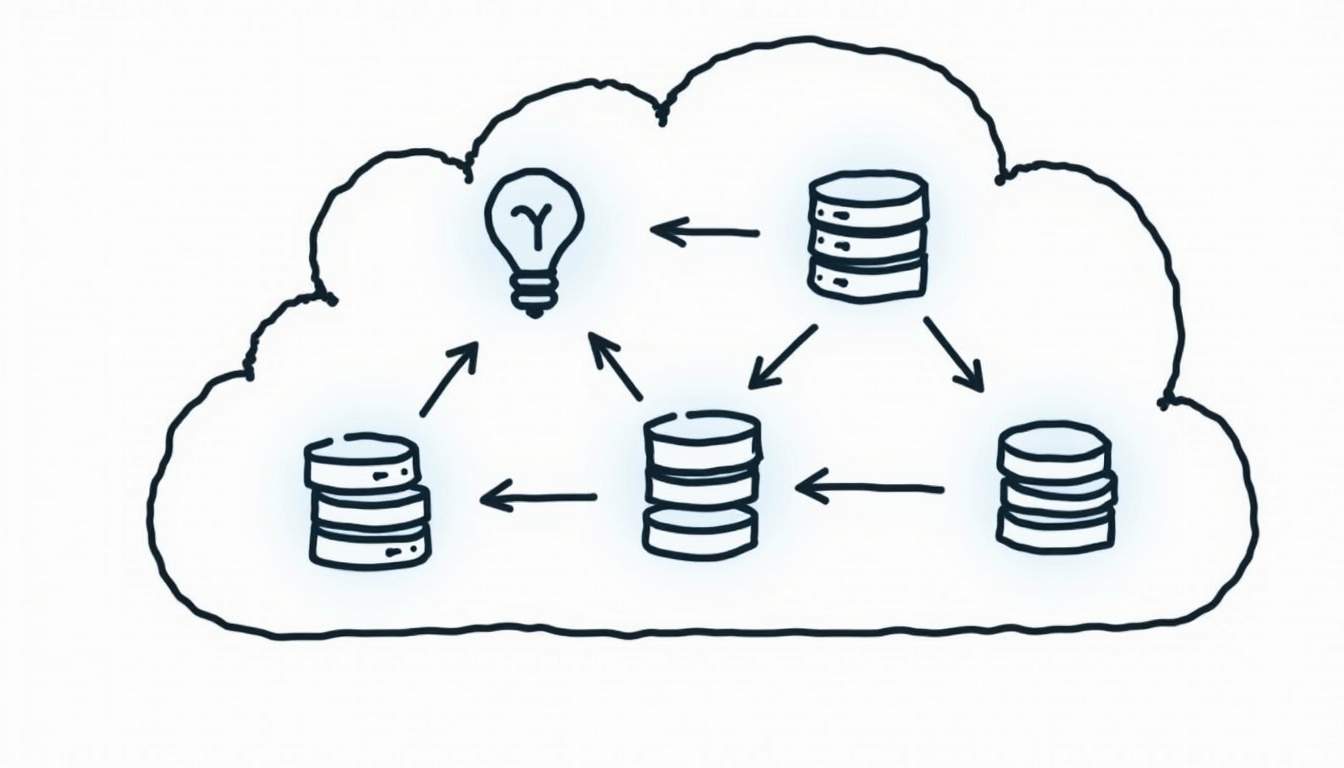
Azure Database for PostgreSQL is Microsoft’s managed PostgreSQL service for teams that want PostgreSQL without owning patching, backups, storage operations, and most of the server lifecycle. The important choice is not simply “Azure or self-managed PostgreSQL.” It is whether your workload needs managed operations, predictable scaling, built-in backup and restore, and Azure-native security controls.
Quick takeaway: Use Azure Database for PostgreSQL Flexible Server when you want PostgreSQL with managed backups, configurable compute and storage, private networking options, and Azure operations around the database. Treat it as a production service choice, not just a place to host a small database.
This guide focuses on the practical decisions: server shape, storage, backups, networking, connection flow, and the checks to make before production. It complements broader cloud migration planning such as the AWS DMS migration runbook and database selection thinking in RDS vs DynamoDB, but keeps the lens on PostgreSQL running inside Azure.
What Azure Database for PostgreSQL Is
Microsoft describes Azure Database for PostgreSQL as a managed service based on the PostgreSQL community edition. In the current Azure model, Flexible Server is the default path for new deployments because it gives more control over compute, maintenance, availability configuration, networking, and operational settings than older patterns.
The service does not remove database design work. You still need to model data, tune queries, manage indexes, plan migrations, and test failover behavior. What it removes is the routine platform work around the database host: server provisioning, backup infrastructure, patch orchestration, storage expansion, and integration with Azure monitoring and identity controls.
| Decision area | What Azure manages | What your team still owns |
|---|---|---|
| Server lifecycle | Provisioning, patching flow, managed platform operations | Version choice, maintenance windows, extension policy, workload testing |
| Data protection | Automated backups and restore capabilities | Backup retention choice, restore drills, application-level recovery plan |
| Performance | Compute tiers, storage configuration, metrics | Schema, indexes, query plans, connection pooling, workload design |
| Security | Azure networking, encryption, authentication options | Least privilege, firewall/private access rules, secret rotation, auditing process |
When Flexible Server Is a Good Fit
Flexible Server is a strong fit when the database is important enough to need production controls, but not special enough to justify a team running PostgreSQL on virtual machines. Typical use cases include SaaS application backends, internal platforms, analytics-supporting relational stores, and cloud-native applications that need PostgreSQL compatibility with Azure operations.
- You want PostgreSQL compatibility without maintaining the operating system and database host yourself.
- You need Azure-native networking, monitoring, backup, and security controls around a relational database.
- You expect the workload to change and want a cleaner path to resize compute or storage than a hand-built VM setup.
- You want a standard database platform that fits CI/CD and infrastructure-as-code workflows, similar to how Azure CI/CD pipelines standardize application delivery.
It is not automatically the right answer for every PostgreSQL workload. If you need unusual superuser-level control, unsupported extensions, custom filesystem tuning, or a topology that the managed service does not support, self-managed PostgreSQL may still be required. The practical test is simple: if the managed constraints fit the workload, take the operational leverage. If the constraints block a hard requirement, document the exception before you build around it.
Compute, Storage, and Scaling Choices
Azure separates the main sizing choices into compute and storage. Microsoft’s compute options documentation covers the available compute families and sizing model. The storage documentation covers storage configuration, growth behavior, IOPS-related choices, and related limits.
| Choice | Use it to decide | Operational note |
|---|---|---|
| Compute tier and size | CPU and memory needed by steady-state workload | Start from measured load where possible; resize after benchmark data, not guesses. |
| Storage size | Data volume, indexes, WAL growth, short-term spikes | Do not size only for today’s data. Include growth and restore-test headroom. |
| IOPS/performance settings | Write-heavy apps, reporting jobs, batch imports | Watch latency and saturation metrics during realistic load tests. |
| Maintenance window | When platform updates are least risky | Align with release windows and on-call coverage, not only with “low traffic.” |
For production, avoid the common mistake of treating the first created server as the final architecture. Create a small benchmark environment, load a realistic dataset, run the important queries, and record the metrics. A sizing decision without workload evidence is just a more expensive guess.
Basic Provisioning Flow
You can create servers through the Azure portal, ARM/Bicep/Terraform, or Azure CLI. The exact command should be adapted to your region, resource group, network model, version, and SKU. The CLI example below is intentionally a starting point, not a copy-paste production standard.
az postgres flexible-server create \
  --resource-group rg-prod-data \
  --name rn-prod-postgres \
  --location eastus \
  --admin-user pgadmin \
  --database-name appdb \
  --version 16 \
  --sku-name Standard_D4ds_v5 \
  --storage-size 128
If you are building repeatable environments, keep the database definition in the same delivery discipline as the application. The pattern is close to the one used for cloud tooling in the Google Cloud CLI setup guide: define the target state, script the setup, then verify the result instead of relying on manual console clicks.
Networking and Connection Design
Connection design should be decided before application rollout. Microsoft’s connection overview explains the supported connection approaches and client-side considerations. For most production systems, the main question is whether access should be public with strict firewall rules or private through Azure networking.
| Pattern | Best fit | Watch for |
|---|---|---|
| Public access with firewall rules | Simple internal tools, controlled source IPs, early non-production environments | IP drift, overly broad rules, secrets in local configs |
| Private access | Production apps inside Azure VNets or private network paths | DNS setup, peering/routing, operational access for admins |
| Connection pooling | Apps with many short-lived connections | Pool sizing, transaction behavior, timeout handling |
A basic psql test should verify SSL, hostname, database, and credentials from the same network path your application will use. Testing only from a laptop can hide private DNS, firewall, or runtime identity issues.
psql "host=rn-prod-postgres.postgres.database.azure.com \
  port=5432 dbname=appdb user=appuser sslmode=require"Code language: JavaScript (javascript)
Backups, Restore, and Business Continuity
Managed backups are one of the strongest reasons to use the service, but backups are not a recovery strategy by themselves. Microsoft’s backup and restore documentation covers automated backups and restore capabilities for Flexible Server. Your team still needs to decide retention, recovery point expectations, recovery time expectations, and restore-test cadence.
- Run a restore drill before production traffic depends on the database.
- Write down who can approve a restore and who executes it.
- Include application configuration, secrets, DNS, and connection strings in the recovery runbook.
- For migrations, test cutover and rollback separately from “can we copy the data?” The CDC and cutover checklist is a useful model even outside AWS.
The operational smell to avoid: “Azure has backups, so we are safe.” A restore you have not tested is a theory. A restore you can execute from a runbook is a recovery capability.
Security Baseline
The Azure PostgreSQL security documentation should be treated as a baseline checklist, not a paragraph to skim. At minimum, production systems need tight network access, least-privilege database roles, encrypted connections, secret rotation, logging, and a clear owner for configuration changes.
| Control | Practical check | Why it matters |
|---|---|---|
| Network access | No broad public allowlist for production unless explicitly justified | Most incidents start with exposure plus weak operational discipline. |
| Database roles | Application role cannot administer the whole server | Limits blast radius if app credentials leak. |
| Secrets | Connection strings live in a secret store, not in repos or wiki pages | Prevents accidental credential exposure. |
| Monitoring | Alerts cover CPU, storage, connections, failed auth, and latency | Database failures are easier to fix before users report them. |
Production Readiness Checklist
Before calling an Azure PostgreSQL deployment production-ready, run a short readiness review. Keep it boring. The goal is not to admire the cloud architecture; the goal is to know what happens when traffic, deploys, failures, and humans touch the database.
- Workload benchmark completed with realistic data volume and query mix.
- Compute and storage settings documented with the reason behind each choice.
- Network access model tested from the actual application runtime.
- Restore drill completed and timed.
- Connection pooling and timeout behavior tested under load.
- Monitoring dashboard and alerts exist before launch.
- Application migration, rollback, and schema-change process documented.
- Owner assigned for patch windows, cost review, and database access review.
Common Mistakes
- Choosing the smallest server for production because the app is “not big yet,” then debugging performance during launch.
- Opening public access broadly during setup and forgetting to tighten it later.
- Treating automated backups as proof of recovery without running a restore test.
- Moving PostgreSQL to Azure while leaving schema changes and migrations as manual, undocumented work.
- Ignoring connection counts until the application hits intermittent failures under load.
FAQ
These are the questions that usually come up when a team moves from “we need PostgreSQL” to “we need to operate PostgreSQL safely in Azure.”
Is Azure Database for PostgreSQL the same as running PostgreSQL on a VM?
No. It uses PostgreSQL, but Azure manages much of the server platform around it. You still own schema design, query tuning, roles, migrations, and application behavior.
Should new Azure PostgreSQL deployments use Flexible Server?
For most new deployments, Flexible Server is the practical default because it gives better control over compute, maintenance, networking, and operations than older deployment models. Validate any exception against Microsoft’s current service guidance.
Do Azure PostgreSQL backups replace a recovery plan?
No. Automated backups are the raw capability. A recovery plan includes retention choices, restore drills, owners, application configuration, DNS or connection changes, and a rollback path.
Can I connect to Azure PostgreSQL from outside Azure?
Yes, depending on the access model you configure. For production, prefer the narrowest network path that fits the workload and test from the same runtime path your application will use.
What is the first thing to monitor after launch?
Watch storage growth, CPU, memory, active connections, query latency, failed connections, and backup or maintenance events. Add application-level error rate and request latency next to database metrics so incidents are not debugged in isolation.

Leave a Reply