

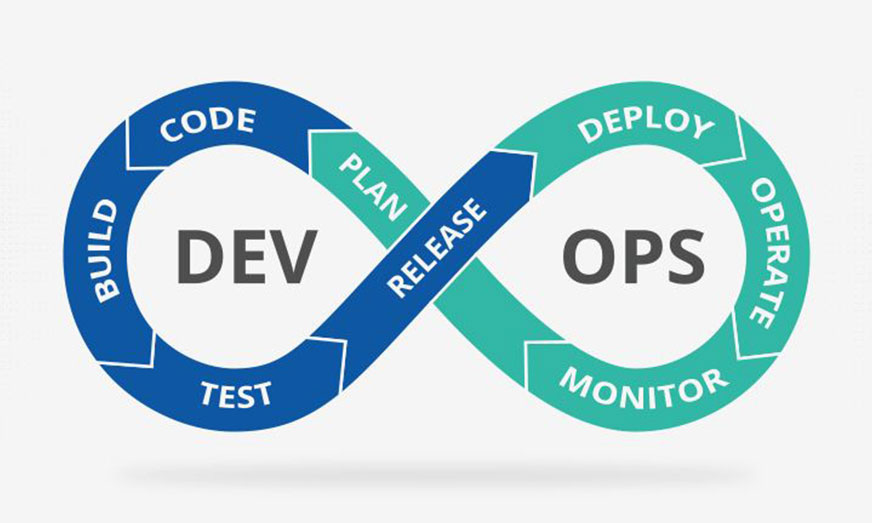
For mid-size companies—typically those with 50 to 500 employees—DevOps implementation is less about textbook frameworks and more about practical adaptation. While large enterprises have dedicated transformation budgets and startups enjoy agility, mid-size businesses sit in a challenging middle ground. They often have growing teams, evolving tech stacks, and just enough complexity to make DevOps adoption both necessary and difficult. In this article, we’ll explore what DevOps implementation actually looks like in this segment: what works, what doesn’t, and how to get real results without illusions.
Typical IT Infrastructure in Mid-Size Businesses
Most mid-size companies operate within a complex and often fragmented technology environment. It is common to encounter a mix of legacy systems, monolithic applications, and newer microservices architectures coexisting in production. This hybrid setup typically involves:
- Traditional on-premises infrastructure combined with partial cloud adoption, creating a hybrid IT landscape.
- Multiple teams relying on siloed tools for deployment, monitoring, and version control, which can lead to communication gaps and inefficiencies.
- Manual release processes that tend to be slow, prone to human error, and difficult to audit or trace, increasing operational risks.
Unlike startups that might be “DevOps-native” from day one or large enterprises with the resources to maintain dedicated DevOps teams, mid-size organizations face the unique challenge of modernizing their infrastructure without disrupting ongoing operations. This balance requires strategic planning, clear prioritization, and realistic goal-setting to avoid operational downtime while improving agility and reliability.
To navigate these complexities effectively, many mid-size businesses benefit from conducting a thorough evaluation of their current systems and processes. Engaging with experts in startup audit services can provide valuable insights into technical debt, security posture, and scalability, helping organizations create a tailored roadmap for modernization that aligns with business objectives.
DevOps Practices That Work (And Those That Don’t)
DevOps is more than just CI/CD pipelines. For mid-size companies, certain practices show consistent value:
What Works
- CI/CD Adoption: Automating testing and deployment reduces human error and accelerates delivery.
- Infrastructure as Code (IaC): Tools like Terraform or Pulumi enable replicable and version-controlled environments.
- Cross-Functional Collaboration: Daily syncs, shared responsibility, and clear ownership build a DevOps culture organically.
- Monitoring and Alerting: Early implementation of tools like Prometheus, Grafana, or Datadog can catch issues before users do.
What Fails
- Big Bang Toolchain Overhauls: Replacing every tool at once overwhelms teams and rarely sticks.
- Mandated Culture Shifts: Telling teams to “be DevOps” without training or role clarity leads to confusion.
- Automation Without Standards: Scripting deployments is helpful, but without consistency and documentation, it creates future headaches.
Real Changes After DevOps Implementation: Case Examples
Case 1: Mid-Size SaaS Platform (150 employees)
The company struggled with weekly outages during deployments. By implementing CI/CD pipelines with GitHub Actions and adding pre-production staging environments, deployment issues dropped by 80%. Manual QA was replaced with automated regression testing, reducing release time from 3 days to 4 hours.
Case 2: FinTech Firm with Compliance Needs (300 employees)
Initially, deployments were infrequent due to fear of failure. After adopting infrastructure as code and implementing monitoring with compliance dashboards, they moved from quarterly to bi-weekly releases. Regulatory audits became easier thanks to traceability built into the toolchain.
Case 3: Legacy CRM Provider (80 employees)
Resistance to DevOps culture slowed progress. The breakthrough came by introducing small automation wins (e.g., auto-rollbacks and alerts), which built trust. Eventually, the teams embraced wider DevOps practices voluntarily.
Stages of DevOps Implementation: A Realistic Roadmap
DevOps is not an overnight transformation. For mid-size businesses, the transition happens in phases:
Stage 1: Cultural Groundwork
Begin by aligning leadership and engineering teams around common goals. Focus on communication, ownership, and breaking silos. This can be as simple as Dev and Ops teams attending the same standups.
Stage 2: Visibility and Feedback Loops
Introduce basic monitoring and feedback mechanisms. Dashboards for performance, error tracking, and user behavior help everyone see what’s happening in real time. Tools like Grafana, Sentry, or New Relic are common starting points.
Stage 3: Automate Repetitive Tasks
Target the biggest pain points—like manual testing or production deployments—and automate them incrementally. Use Jenkins, GitLab CI/CD, or CircleCI to begin with automated builds and deployments.
Stage 4: Infrastructure as Code and Standardization
Once trust in automation grows, move infrastructure definitions into version control. Introduce Terraform or Ansible. Set up environments that can be spun up, torn down, and replicated on demand.
Stage 5: Full DevOps Integration
Finally, develop a fully integrated toolchain, establish SRE (Site Reliability Engineering) roles if needed, and adopt KPIs around MTTR (mean time to recovery), release frequency, and change failure rate.
Conclusion: Pragmatic DevOps for Real Companies
DevOps for mid-size companies is not a perfect textbook journey. It’s a continuous, iterative improvement process shaped by constraints and culture. What matters most is not tool adoption but mindset shifts, gradual wins, and a feedback-driven approach. By focusing on realistic milestones—from visibility to CI/CD and infrastructure automation—mid-size companies can build sustainable DevOps capabilities that scale with growth, without overextending their teams or budgets.



Leave a Reply