


In the evolving landscape of software development and IT operations, two roles often come up in discussions about improving system reliability, deployment speed, and operational efficiency: Site Reliability Engineer (SRE) and DevOps Engineer. While these terms are sometimes used interchangeably, they represent distinct philosophies, responsibilities, and career paths. Understanding the key differences between SRE and DevOps is essential for organizations aiming to optimize their software delivery processes and for professionals navigating their career options in this dynamic field.
Defining DevOps and Site Reliability Engineering
What is DevOps?
DevOps is fundamentally a cultural and organizational philosophy that emphasizes collaboration between software development (Dev) and IT operations (Ops) teams. It aims to shorten the software development lifecycle while delivering features, fixes, and updates frequently, reliably, and efficiently. Rather than being a specific job title, DevOps represents a set of practices and cultural mindsets adopted across an organization to improve communication, integration, and automation.
According to industry insights, DevOps practices are widely adopted, with 13 out of 14 common practices implemented by organizations. Approximately half of the participants in related studies report applying these practices consistently, indicating that DevOps is becoming a standard approach in modern software environments. The success of DevOps can be attributed to its focus on continuous integration and continuous delivery (CI/CD), which allows teams to automate testing and deployment processes, thereby minimizing the risk of human error and accelerating the release of high-quality software. Additionally, the implementation of DevOps often leads to a cultural shift within organizations, fostering an environment of shared responsibility and accountability, where developers and operations teams work together towards common goals.
What is Site Reliability Engineering (SRE)?
Site Reliability Engineering, on the other hand, is a specific role and discipline that applies software engineering principles to infrastructure and operations problems. SRE focuses on building scalable and highly reliable software systems. Rather than simply managing operations, SREs develop tools and automation to improve system reliability, availability, and performance.
One expert insight highlights that “SRE is meant to be an actual role, whereas DevOps is a cultural phenomenon and philosophy adopted by the broader team or entire organization.” This distinction underscores that SRE is a more specialized function with a clear set of responsibilities centered around reliability engineering. SREs often utilize metrics and service-level objectives (SLOs) to quantify reliability and performance, enabling teams to make data-driven decisions about system improvements. Furthermore, SRE practices encourage a proactive approach to incident management, where teams not only respond to outages but also analyze their root causes to prevent future occurrences. This focus on resilience and continuous improvement is critical in today’s fast-paced digital landscape, where user expectations for uptime and performance are higher than ever.
Core Responsibilities and Focus Areas
DevOps Engineer Responsibilities
DevOps engineers work to bridge the gap between development and operations teams. Their responsibilities typically include automating deployment pipelines, managing infrastructure as code, monitoring system performance, and fostering a collaborative environment that supports continuous integration and continuous delivery (CI/CD).

Because DevOps is a philosophy embraced by entire teams, DevOps engineers often act as facilitators and enablers, ensuring that best practices such as automated testing, infrastructure automation, and rapid feedback loops are in place. Their work helps organizations achieve faster delivery cycles and more reliable software releases. Additionally, they may implement containerization technologies, such as Docker and Kubernetes, to streamline application deployment and scaling, allowing teams to manage microservices more effectively. By leveraging cloud platforms, DevOps engineers can also optimize resource usage and improve cost efficiency, ensuring that applications are not only performant but also economically sustainable.
Site Reliability Engineer Responsibilities
SREs take a more engineering-driven approach to operations. They design and implement systems that improve the reliability and scalability of applications and infrastructure. This includes creating automation tools to reduce manual intervention, defining service level objectives (SLOs), and conducting post-incident analyses to prevent future outages.
Unlike traditional operations roles, SREs apply software development skills to operational problems, often writing code to automate tasks and improve system health. Their goal is to maintain a balance between releasing new features and ensuring system stability, often using error budgets to guide decision-making. Furthermore, SREs are responsible for building monitoring and alerting systems that provide real-time insights into application performance, enabling teams to proactively address potential issues before they escalate into critical failures. By fostering a culture of blameless post-mortems, SREs encourage teams to learn from incidents and continuously improve processes, ultimately leading to a more resilient infrastructure that can adapt to changing demands and user needs.
Salary and Career Outlook
From a compensation perspective, Site Reliability Engineers tend to command higher salaries compared to DevOps engineers. In the United States, the average salary for an SRE is approximately $164,937 per year, while DevOps engineers earn around $130,000 annually. This difference reflects the specialized skill set required for SRE roles and the critical importance of reliability in large-scale systems. SREs are often tasked with ensuring uptime and performance, which requires a deep understanding of both software engineering and systems administration. Their expertise in automation, monitoring, and incident response is vital for maintaining the health of complex applications and services.
As organizations increasingly rely on cloud infrastructure, microservices, and continuous delivery, the demand for both roles continues to grow. However, the nuanced differences in responsibilities mean that professionals should carefully consider which path aligns best with their skills and career goals. For instance, while DevOps engineers focus on the collaboration between development and operations teams to streamline the software delivery process, SREs take a more proactive approach to system reliability, often employing metrics and service-level objectives (SLOs) to measure success. This distinction can influence not only job satisfaction but also the types of projects and technologies professionals will engage with throughout their careers.
Furthermore, the evolving landscape of technology is shaping the future of both roles. With the rise of artificial intelligence and machine learning, SREs are beginning to incorporate these advanced technologies into their workflows to predict and mitigate potential system failures before they occur. This trend not only enhances system reliability but also opens up new avenues for career advancement and specialization within the field. Similarly, DevOps engineers are increasingly adopting practices such as Infrastructure as Code (IaC) and container orchestration to improve deployment efficiency and scalability, further blurring the lines between these two critical roles in the tech industry.
Impact on Software Delivery and Organizational Culture
DevOps as a Cultural Movement
DevOps is often described as a cultural movement that transforms how organizations build, test, and release software. Its emphasis on collaboration, automation, and continuous improvement helps break down silos between teams, fostering a culture of shared responsibility for software quality and operational stability.
Research indicates that adopting DevOps practices can lead to rapid delivery, improved team capabilities, and reduced operational burdens. However, challenges such as high costs and lack of practical guidance can hinder successful implementation. Organizations must invest in training, tooling, and process changes to realize the full benefits of DevOps.
SRE’s Role in Enhancing Reliability
SRE complements the DevOps philosophy by providing a structured approach to reliability. By defining clear objectives and engineering solutions to meet them, SRE teams help organizations maintain uptime and performance even as they accelerate delivery.
The SRE model introduces metrics such as service level indicators (SLIs) and error budgets, which guide decision-making and balance innovation with stability. This approach ensures that new features do not come at the expense of user experience or system health.
Benchmarking and Metrics: Measuring Success
DevOps Metrics and Industry Benchmarks
Organizations adopting DevOps often rely on benchmarking reports like those from the DevOps Research and Assessment (DORA) group. These reports focus on continuous deployment and delivery metrics such as deployment frequency, lead time for changes, and mean time to recovery. Such metrics provide valuable insights into the efficiency and effectiveness of software delivery pipelines.
Challenges in Open Source Software (OSS) Projects
While DORA benchmarks are widely used in enterprise environments, they may not be directly applicable to open-source software projects. OSS projects often emphasize continuous release and community impact, requiring different metrics such as Release Frequency and Lead Time For Released Changes to accurately measure performance.
Recognizing these differences is important for organizations and contributors involved in OSS, as it highlights the need for tailored benchmarking approaches that reflect the unique dynamics of open-source development.
Relationship Between DevOps and Microservices
The adoption of microservices architecture is often linked with DevOps practices, as both aim to increase agility and scalability. Microservices enable teams to develop, deploy, and scale components independently, which aligns well with DevOps principles of continuous delivery and automation.
However, recent studies suggest that the relationship between DevOps and microservices in software teams may not be as significant as previously thought. This indicates that while microservices can complement DevOps, successful adoption depends on various factors including team structure, tooling, and organizational culture.
Choosing Between SRE and DevOps: What Should Organizations Consider?
When deciding whether to invest in Site Reliability Engineering or DevOps practices, organizations should consider their specific needs, scale, and maturity. DevOps provides a broad cultural framework that can improve collaboration and delivery speed across teams, making it suitable for organizations seeking to modernize their development processes.
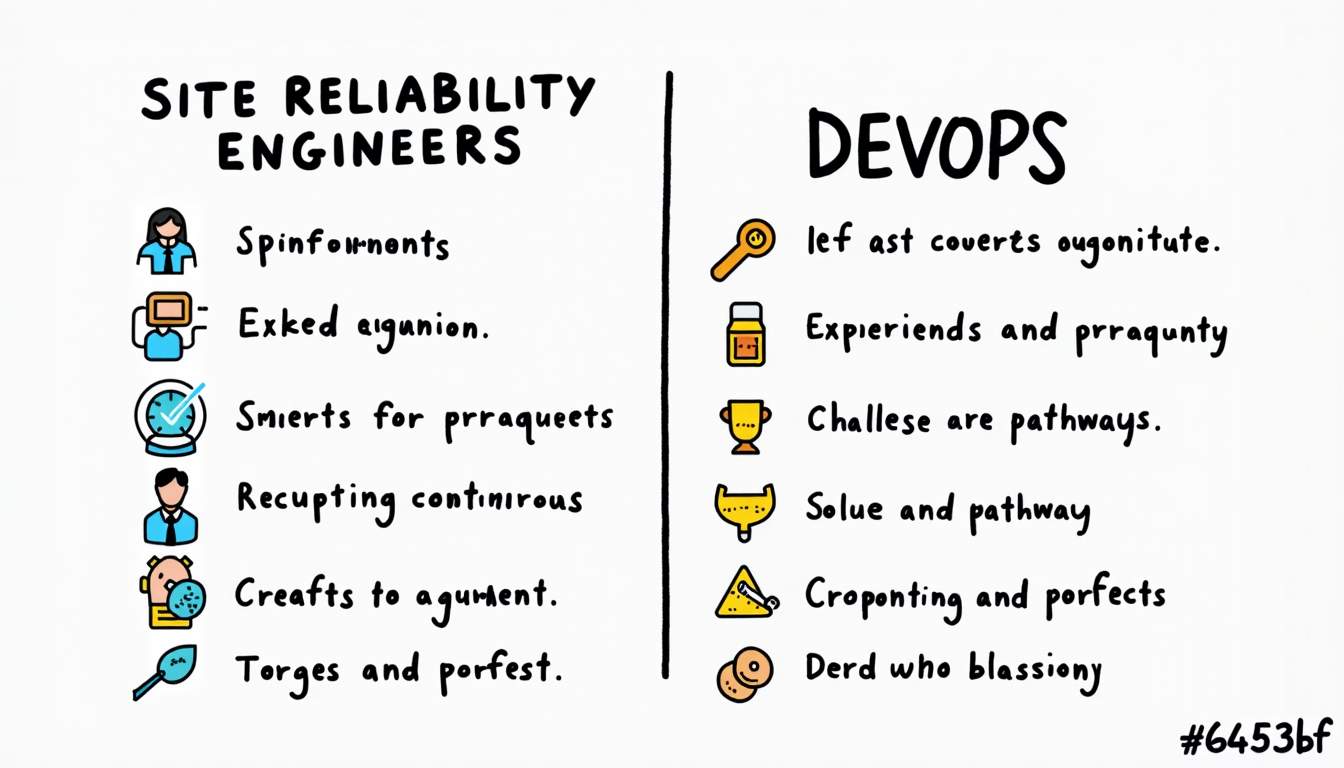
For organizations with complex, large-scale systems where reliability is paramount, establishing dedicated SRE teams can provide the engineering rigor needed to maintain uptime and performance. SRE’s focus on automation, monitoring, and error budgeting offers a structured way to manage operational risks.
Ultimately, many organizations find value in integrating both approaches—adopting DevOps culture broadly while leveraging SRE expertise for critical reliability challenges.
Conclusion
Site Reliability Engineering and DevOps represent two complementary but distinct approaches to modern software development and operations. DevOps is a cultural philosophy that fosters collaboration and continuous improvement across teams, while SRE is a specialized engineering discipline focused on maintaining system reliability through automation and metrics-driven decision-making.

Understanding the differences between these roles helps organizations implement effective strategies for software delivery and operational excellence. Whether adopting DevOps practices, building SRE teams, or combining both, the goal remains the same: delivering reliable, high-quality software quickly and efficiently.




Leave a Reply