


Release management interviews test whether you can move changes from “approved” to “live” without chaos. The strongest answers show that you understand release scope, risk, rollback, stakeholder communication, automation, and post-release learning.
Quick takeaway: Do not answer release management questions like generic DevOps questions. Tie every answer to change windows, deployment readiness, rollback criteria, risk ownership, release notes, and production verification.
Who This Guide Is For
Use this guide if you are preparing for a release manager, DevOps engineer, SRE, platform engineer, or engineering lead interview where release coordination is part of the role. It is intentionally narrower than a broad Azure DevOps interview guide or a general DevOps interview prep guide.
What Interviewers Are Really Testing
A release management interview is usually about judgment. Tools matter, but interviewers want to know whether you can protect production while still helping teams ship.
| Signal | What a Strong Answer Shows | Common Weak Answer |
|---|---|---|
| Release planning | You define scope, owner, dependencies, freeze windows, and readiness criteria | “We deploy when development is done.” |
| Risk management | You identify blast radius, rollback paths, feature flags, approvals, and customer impact | “QA tested it, so it should be fine.” |
| Communication | You keep engineering, support, product, security, and stakeholders aligned | “I send a message after deployment.” |
| Automation | You use pipelines and release tooling while keeping manual gates where risk requires them | “Automation means no approvals are needed.” |
| Post-release learning | You track incidents, failed changes, lead time, and lessons learned | “Once it is deployed, the release is over.” |
Release Management Interview Questions and Strong Answer Angles
What is release management?
Release management is the planning, coordination, deployment, and verification of software changes across environments. A strong answer connects scope control, change approval, deployment automation, rollback, and communication. Mention that release management is different from simply “pushing code” because it owns the path to safe production change.
How is release management different from change management?
Change management controls the approval and governance of changes. Release management coordinates the package of changes and the delivery process. In practice, they overlap: a release may contain approved changes, but the release manager still owns readiness, scheduling, deployment coordination, and post-release validation. Atlassian’s change management overview is useful context here: Atlassian Change Management.
What are the main phases of a release lifecycle?
A practical lifecycle includes intake and scope definition, risk assessment, build and test readiness, deployment planning, approval, release execution, production verification, rollback readiness, communication, and retrospective. Keep the answer concrete rather than listing abstract phases.
How do you decide whether a release is ready?
Use readiness criteria: completed scope, passing automated tests, approved change record if required, known risks, documented rollback, stakeholder sign-off, monitoring dashboards ready, release notes prepared, and support teams briefed. If any high-risk item is missing, call out the release as not ready.
What metrics do you track for release management?
Track deployment frequency, change failure rate, rollback frequency, mean time to recovery, lead time for changes, release delay reasons, escaped defects, and incident volume after releases. Tie each metric to a decision: what you would improve if the number moves in the wrong direction.
How do feature flags affect release management?
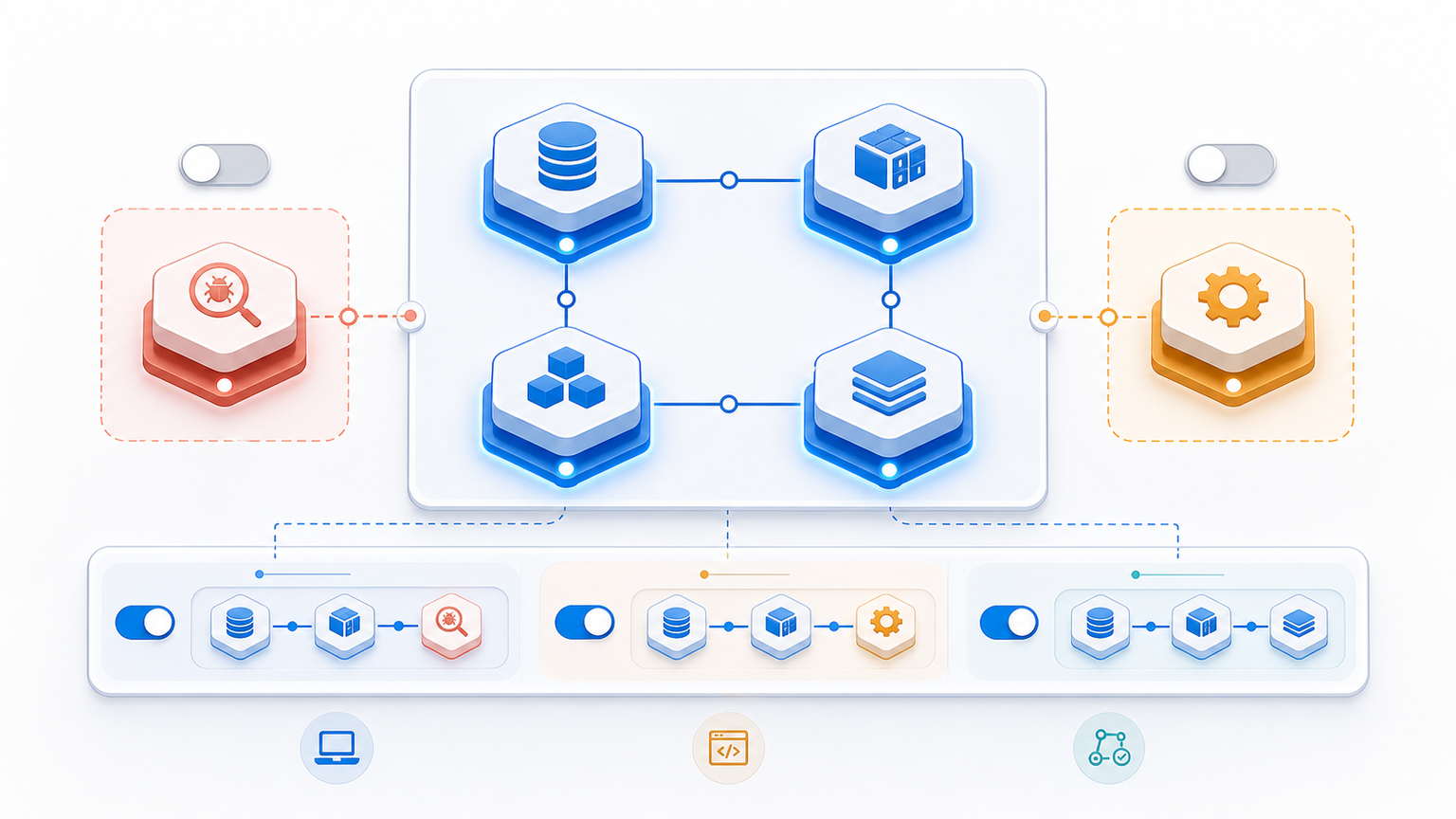
Feature flags separate deployment from release. They let teams ship code safely, enable gradual rollout, target cohorts, and turn features off without redeploying. A strong answer also mentions flag cleanup and ownership, because stale flags become technical debt.
How do you handle a failed release?
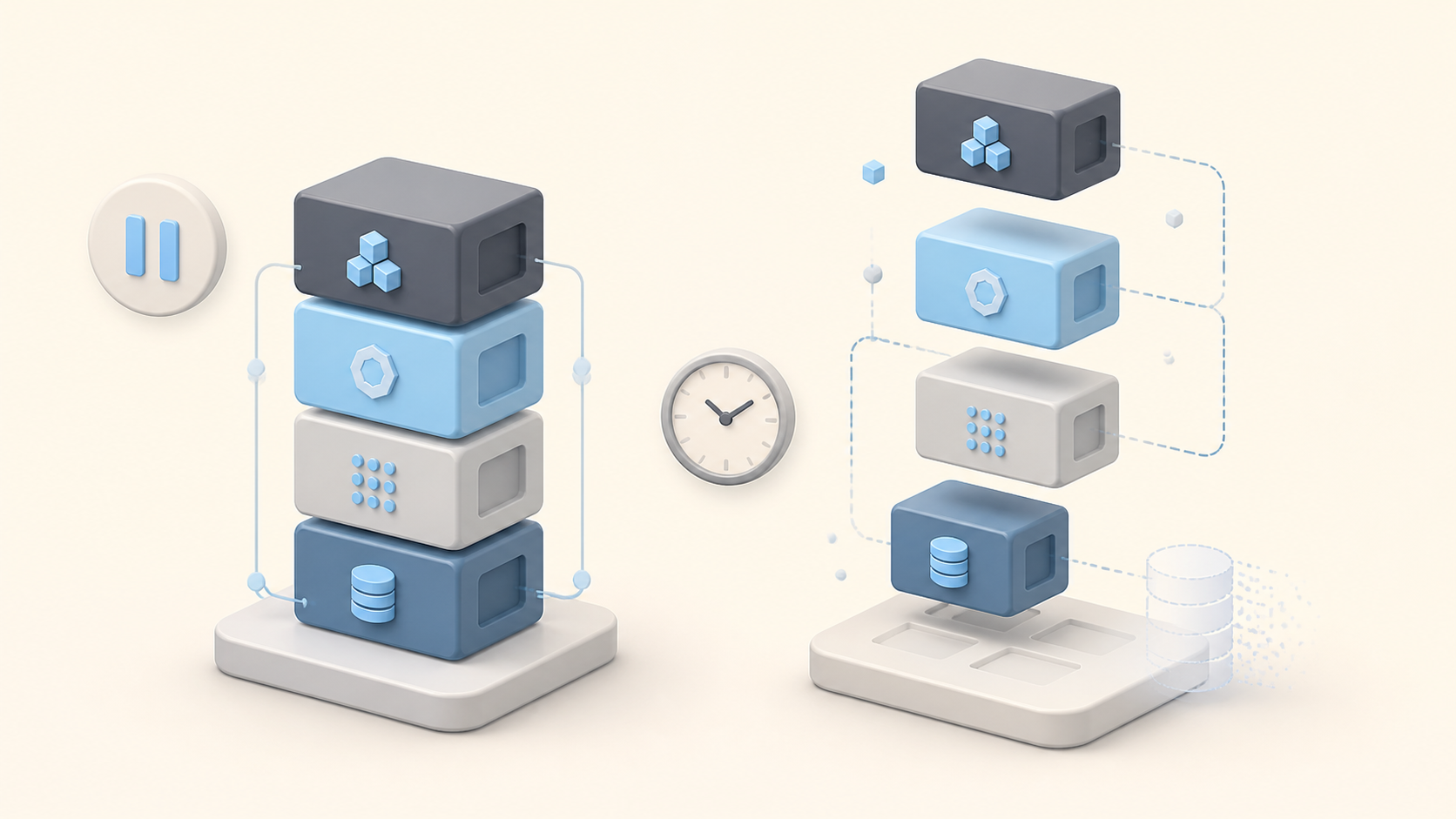
First stabilize production: pause rollout, communicate status, activate rollback or mitigation, and verify customer impact. Then preserve evidence, document the timeline, run a blameless review, and convert lessons into pipeline, testing, monitoring, or approval improvements. Link this answer to DevOps interview failure examples if you need more failure-mode practice.
What release tools have you used?
Name tools only if you can explain how they supported the release process. Examples include GitLab Releases, Azure Pipelines release pipelines, Jenkins, Jira, ServiceNow, LaunchDarkly, Argo CD, and observability tools. GitLab’s release docs and Microsoft’s release pipeline docs are useful references: GitLab Releases and Azure release pipelines.
How do you coordinate releases across multiple teams?
Define one release owner, dependency map, communication channel, cutover plan, readiness checklist, and escalation path. Ask each team for clear go/no-go criteria. Avoid vague status updates like “almost ready”; require evidence such as test results, approvals, and monitoring readiness.
How do you reduce release risk without slowing teams down?
Use smaller releases, automated tests, progressive delivery, feature flags, clear rollback, environment parity, observability, and standard release templates. Google’s SRE discussion of release engineering is a good source for the idea that release work should make production changes repeatable and reliable: Google SRE Release Engineering.
Scenario Questions Interviewers Like
Scenario questions separate people who have memorized definitions from people who can run a release under pressure. Practice with a structured answer: context, risk, action, communication, and follow-up.
| Scenario | What to Cover in Your Answer | Red Flag to Avoid |
|---|---|---|
| A critical bug is found one hour before release | Assess severity, customer impact, fix confidence, rollback options, and stakeholder decision path | Saying “ship anyway” or “cancel everything” without risk analysis |
| Two teams disagree on release readiness | Use objective readiness criteria, known blockers, dependency map, and release owner decision rights | Turning it into a personality conflict |
| A deployment succeeds but monitoring shows errors | Pause rollout, verify impact, rollback or mitigate, communicate, and start incident review | Waiting for users to complain |
| Security asks for a last-minute change | Clarify severity, compliance need, test impact, rollback, and whether it belongs in this release | Treating security as an external blocker instead of part of release risk |
| The business wants a risky date-driven launch | Explain trade-offs, minimum safe scope, rollback, phased rollout, and explicit risk acceptance | Hiding risk to keep the date |
A Simple Answer Framework
For most release management interview questions, use this structure: define the release risk, name the control, explain the trade-off, and show how you verify production afterwards. This keeps answers practical and avoids generic “communication is important” filler.
- Risk: What can break, who is affected, and what is the blast radius?
- Control: What checklist, gate, test, flag, rollback, or approval reduces the risk?
- Trade-off: What speed, scope, or reliability decision are you making?
- Verification: What monitoring, logs, smoke tests, or business checks prove the release is healthy?
48-Hour Prep Plan
| Time | Focus | Output |
|---|---|---|
| First 30 minutes | Map your release experience | Write 3 release stories: successful release, failed release, cross-team conflict. |
| Next 60 minutes | Practice lifecycle and risk questions | Prepare answers for readiness, rollback, feature flags, metrics, and approvals. |
| Next 60 minutes | Review tooling examples | Pick 2–3 tools you can explain beyond name-dropping. |
| Final 30 minutes | Mock scenario answers | Practice one answer each for delayed release, failed deployment, and stakeholder pressure. |
FAQ
These quick answers cover the common follow-up questions candidates get after the main release management interview section.
What is the best way to answer release management interview questions?
Use concrete examples. Explain the release risk, the control you used, the trade-off you made, and how you verified production health after deployment.
Is release management the same as DevOps?
No. DevOps is a broader culture and operating model for software delivery. Release management is a focused discipline for coordinating safe production change.
What tools should I mention in a release management interview?
Mention tools you can explain in context: CI/CD platforms, release notes, change records, feature flags, deployment dashboards, incident tools, and observability platforms.
How do I answer a failed release question?
Describe how you stabilized production, communicated status, used rollback or mitigation, verified impact, and converted the incident into a process improvement.
What makes a release manager answer stand out?
Strong answers connect release planning to business impact, customer risk, engineering constraints, rollback readiness, and post-release learning.

Leave a Reply