

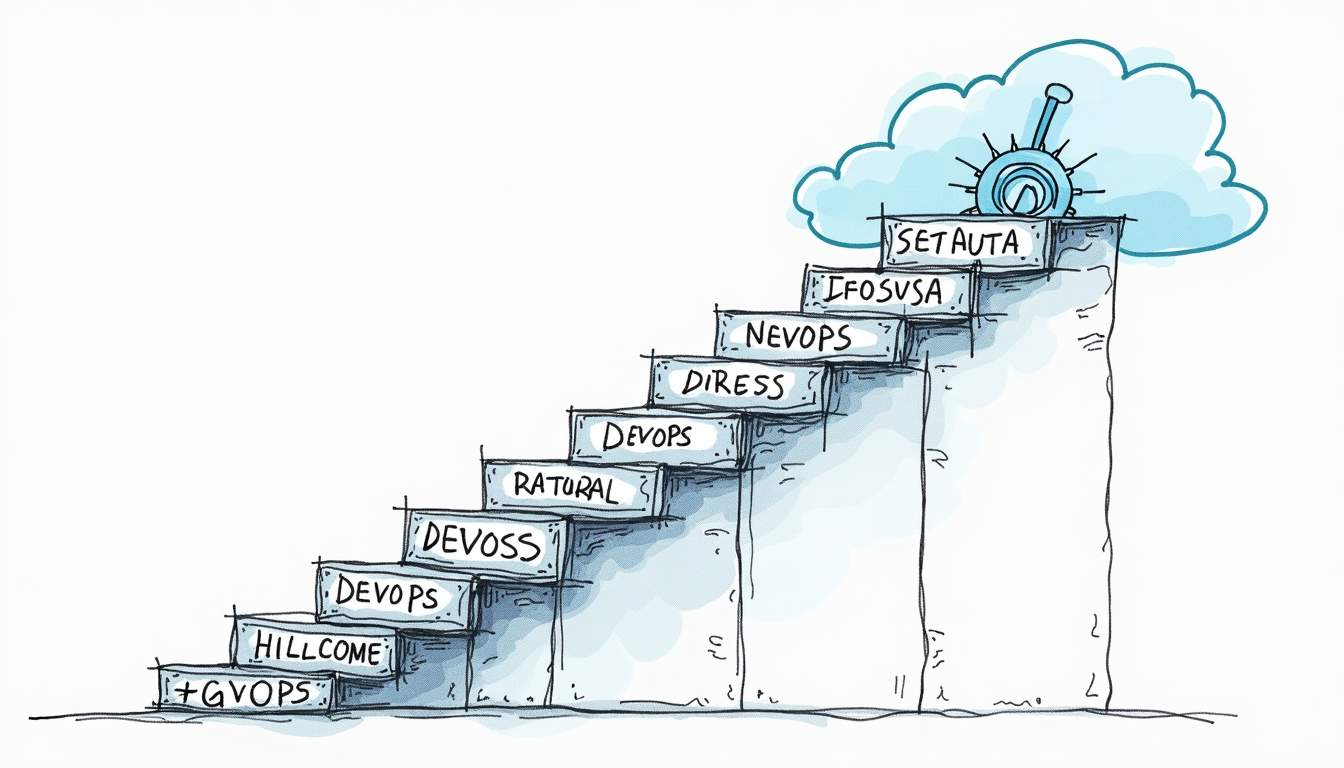
DevOps usually starts with a simple goal: ship software more reliably without turning every release into a fire drill. The hard part is knowing what to fix first. A team might have decent automation but weak monitoring, or a clean CI pipeline but unclear ownership. A DevOps maturity model gives that DevOps journey some structure.
TL;DR: A DevOps maturity model helps teams move from ad hoc releases to predictable, measurable delivery. Start by assessing culture, automation, CI/CD, observability, and security; then improve one bottleneck at a time instead of buying more tools first.
This guide breaks down the maturity model, the usual stages, and the practical signs that a team is moving in the right direction. The point is not to score yourself for the sake of it. The point is to find the next bottleneck and fix it.
What Is the DevOps Maturity Model?
A DevOps maturity model is a way to assess how a team builds, ships, runs, and improves software. It looks at the habits behind delivery: how teams collaborate, how much work is automated, how incidents are handled, and whether feedback actually changes the system.
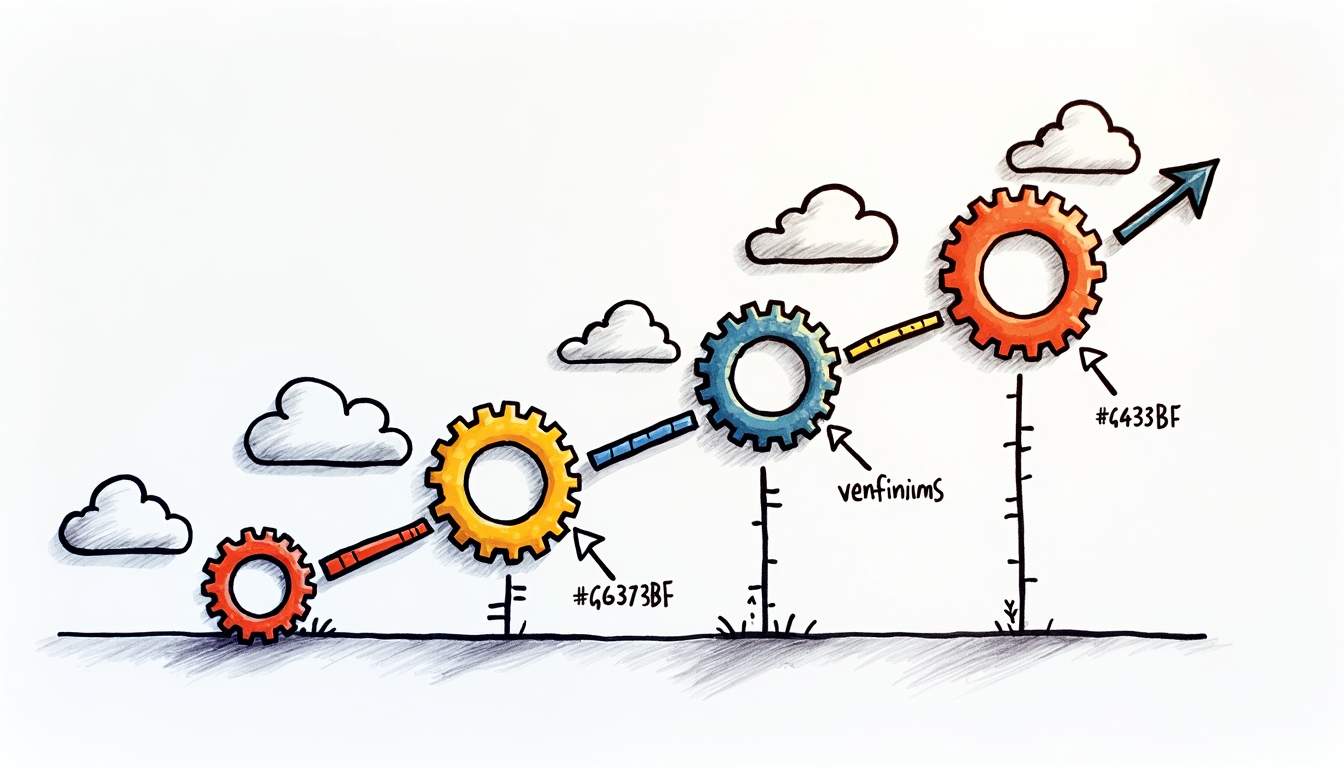
Most versions of the model use stages. Early stages are messy and manual. Later stages are more automated, measured, and predictable. The exact labels vary, but the pattern is the same: teams move from heroics to repeatable systems.
Automation matters, but it is only part of the picture. A mature team also has clear ownership, useful metrics, fast feedback, and enough trust between engineering and operations to solve problems instead of passing them around.
Why Is the DevOps Maturity Model Important?
The model is useful because it turns a vague goal, “we need better DevOps,” into a practical conversation:
- Clear Roadmap: It provides a clear roadmap for organizations to improve their DevOps capabilities incrementally.
- Benchmarking: Teams can benchmark their current state against industry standards and peers.
- Targeted Improvements: Helps identify specific gaps in processes, tools, or culture that need attention.
- Enhanced Outcomes: Mature DevOps practices correlate with faster delivery, fewer failures, and better recovery times.
Used well, the maturity model keeps teams from treating DevOps as a shopping list of tools. It shows where releases slow down, where incidents repeat, and which habit needs attention next.
It also makes improvement less political. If deployment is slow because approvals are manual, that is a process problem. If recovery is slow because alerts are noisy, that is an observability problem. The model helps name the problem without turning it into a blame game.
Stages of the DevOps Maturity Model
Different frameworks use different names, but a five-stage version is easy to work with:
1. Initial (Ad Hoc) Stage
At this stage, DevOps is mostly informal. Development and operations work in separate lanes, releases depend on manual steps, and a lot of knowledge lives in people’s heads.
Challenges include frequent deployment failures, slow recovery times, and high levels of unplanned work. This stage usually creates the most unplanned work because every release depends on individual effort and informal knowledge. the lack of standardized processes can lead to inconsistent quality in software releases, resulting in frustrated stakeholders and a lack of trust in the development team’s capabilities.
2. Managed Stage
Organizations begin to recognize the value of DevOps and start implementing basic practices such as version control, continuous integration (CI), and some level of automation. Collaboration improves but remains limited.
While deployments become more reliable, failures and incidents still occur regularly. This stage sets the foundation for more advanced practices by establishing repeatable processes. Teams may begin to adopt tools that facilitate better communication, such as chat applications and project management software, which can help bridge the gap between development and operations. However, the challenge of cultural change remains, as teams must overcome resistance to new workflows and practices.
3. Defined Stage
At this stage, DevOps processes are standardized and documented across teams. Continuous delivery (CD) pipelines are implemented, and automation covers significant portions of the software lifecycle.
Security considerations start to be integrated, often evolving towards DevSecOps—a practice where security is embedded into CI/CD pipelines from the start. By 2026, 40% of organizations are expected to adopt DevSecOps, reflecting its growing importance in mature DevOps environments (TST Technology). Furthermore, the emphasis on documentation and knowledge sharing fosters a culture of learning and accountability, allowing teams to understand not just the “how” but also the “why” behind their processes.
4. Quantitatively Managed Stage
Organizations use metrics and analytics to monitor performance and drive improvements. DevOps monitoring and analytics markets are projected to reach $15.6 billion by 2026, underscoring the critical role of data-driven decision-making in this stage (Gitnux).
Automation is extensive, covering testing, deployment, and infrastructure management. The DevOps automation market is expected to reach $20.7 billion by 2026, highlighting the increasing reliance on automation to achieve efficiency and reliability (Gitnux). In this stage, organizations often implement feedback loops that allow for rapid iteration based on real-time data, enabling teams to respond to user needs and system performance proactively. This data-driven approach helps teams improve operations and make better follow-up decisions.
5. Optimizing Stage
At the highest maturity level, DevOps is part of everyday work across the organization. Teams improve the system continuously, use advanced tooling where it helps, and respond to incidents quickly.
The global DevOps market is projected to grow from $14.43 billion in 2024 to $139.86 billion by 2034, at a CAGR of 25.50%, reflecting the accelerating adoption and sophistication of DevOps practices worldwide (Expert Market Research). Organizations at this stage are well-positioned to capitalize on this growth. They often experiment with cutting-edge technologies such as artificial intelligence and machine learning to further enhance their DevOps capabilities, enabling predictive analytics and automated decision-making processes that streamline operations and improve service delivery. This keeps the team focused on practical improvements instead of maturity theatre.
Key Dimensions of DevOps Maturity
To assess maturity effectively, organizations should evaluate several critical dimensions:
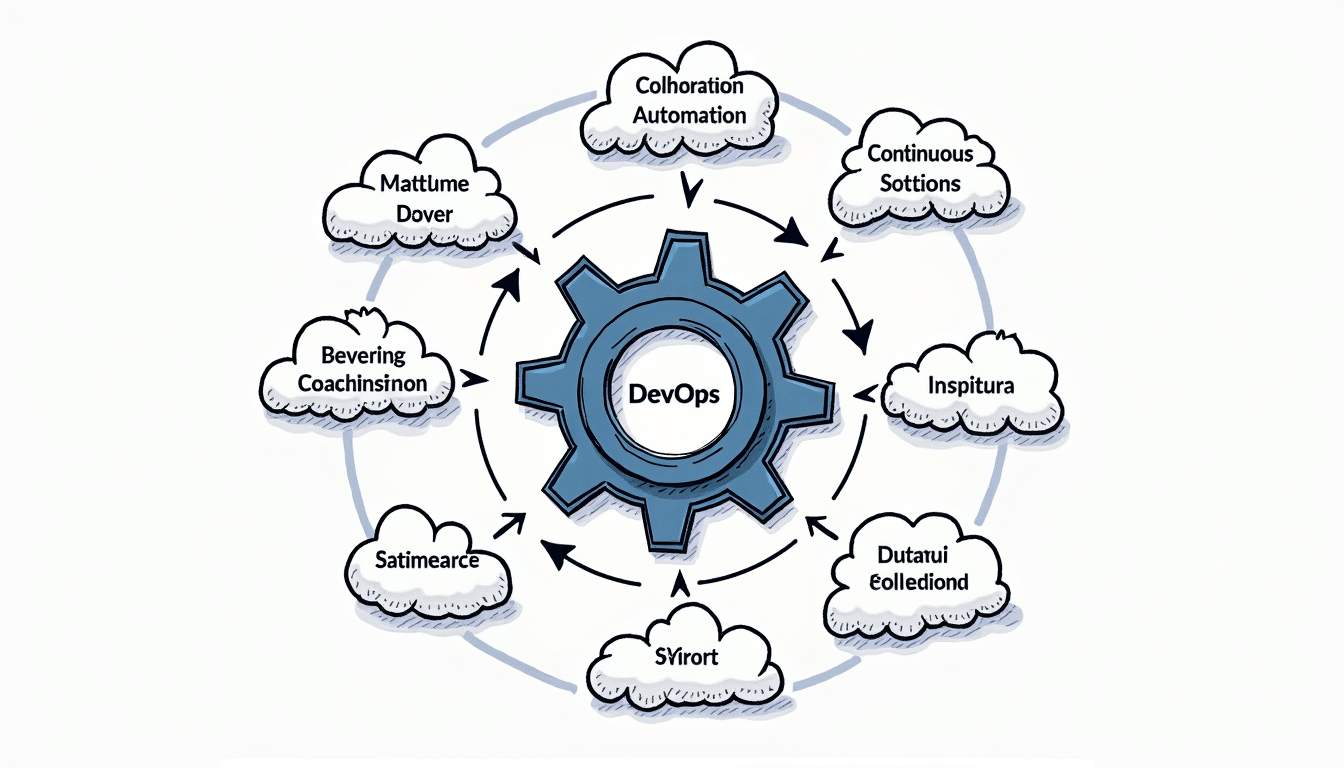
1. Culture and Collaboration
DevOps depends on teams sharing responsibility instead of protecting silos. Mature organizations make room for open communication, cross team work, and blameless postmortems.
Companies with mature DevOps cultures experience 75% fewer incidents and recover 24 times faster than those without DevOps, demonstrating the power of collaboration in reducing downtime and improving resilience (WorldMetrics).
2. Automation and Tooling
Automation is a cornerstone of mature DevOps practices. From automated builds and tests to infrastructure provisioning and deployment, automation reduces human error and accelerates delivery.
The DevOps tools market is expected to grow at a CAGR of 19.9% from 2021 to 2026, reflecting ongoing investments in tooling to support automation and integration (Gitnux).
3. Continuous Integration and Delivery (CI/CD)
A good CI/CD pipeline lets teams release smaller changes more often. The pipeline should include tests, security checks, and enough monitoring to catch problems quickly.
4. Monitoring and Analytics
Real-time monitoring and analytics provide visibility into system performance and user experience. This data drives proactive issue detection and continuous improvement.
5. Security Integration (DevSecOps)
Security works better when it is built into the delivery flow. DevSecOps means teams run security checks early and keep running them, instead of waiting for a late review to find problems.
How to Assess DevOps Maturity in Practice
Use the model as a working assessment, not a compliance exercise. Start with five questions:
- Release flow: How often can the team ship safely, and where does work wait?
- Automation: Which steps are still manual, fragile, or dependent on one person?
- Reliability: How quickly can the team detect, diagnose, and recover from incidents?
- Ownership: Are development, operations, security, and platform responsibilities clear?
- Measurement: Are metrics used to improve the system, or only to report status?
The best next step is usually the constraint that hurts the most: flaky tests, slow reviews, missing deployment automation, weak monitoring, or unclear ownership.
Benefits of Advancing DevOps Maturity
As teams mature, the benefits show up in the day-to-day work:
Reduced Failures and Faster Recovery
Mature teams usually have fewer painful releases because deployment, rollback, monitoring, and ownership are clearer. When something breaks, they know where to look and who owns the fix.
Increased Efficiency and Reduced Rework
Automation and standard processes reduce rework. That gives engineers more time for product work, reliability improvements, and the messy problems that actually need human judgment.
Accelerated Time to Market
Continuous delivery helps teams ship smaller changes faster. That lowers release risk and makes it easier to respond when priorities change.
Enhanced Security Posture
Security checks inside the pipeline reduce late surprises. They also make compliance easier because evidence is generated as part of normal delivery.
Scalability and Adaptability
Mature teams can reuse patterns across services and teams. That makes scaling less chaotic.
Challenges in DevOps Maturity and How to Overcome Them
Maturity work can stall for predictable reasons: cultural resistance, tool sprawl, and weak metrics.
Addressing Cultural Resistance
Leadership support matters, but small wins matter too. Pick one shared problem, fix it across development and operations, then use that result to build trust.
Choosing the Right Tools
Tool sprawl is easy to create and hard to unwind. Choose tools that fit the workflow and integrate cleanly, not tools that look good in a maturity slide.
Establishing Meaningful Metrics
Track a small set of useful metrics: deployment frequency, lead time, change failure rate, and recovery time. If a metric does not help the team make a decision, it is probably reporting noise.
Frequently Asked Questions
What is a DevOps maturity model?
A DevOps maturity model is a framework for assessing how predictable, automated, collaborative, and measurable a team’s software delivery process is.
What are the main stages of DevOps maturity?
Most models move from ad hoc work to managed, defined, measured, and continuously optimized delivery practices.
How do you improve DevOps maturity?
Start with the biggest bottleneck: release friction, manual work, weak observability, unclear ownership, or late security checks. Improve one constraint at a time.
Is DevOps maturity mainly about tools?
No. Tools help, but maturity depends on culture, ownership, process design, automation, feedback loops, and security integration.
Conclusion: Embracing the DevOps Maturity Journey
A DevOps maturity model is useful only if it changes what the team does next. The value is not in labeling yourself “managed” or “defined.” The value is in finding the next bottleneck and removing it.
For most teams, the next step is practical: make releases less fragile, make incidents easier to recover from, and make ownership clearer. That is what maturity should mean.
Treat the model as a map, not a scorecard. Use it to decide what to fix next, then reassess after the work changes how the team actually ships software.



Leave a Reply