


In today’s cloud-driven world, managing access to resources securely and efficiently is paramount. AWS Identity and Access Management (IAM) policies are the backbone of controlling permissions and safeguarding your cloud environment. However, crafting IAM policies that strike the perfect balance between security and usability can be challenging. This article explores best practices, common pitfalls, and advanced strategies to help you master AWS IAM policies and protect your infrastructure from insider threats and misconfigurations.
Understanding the Importance of Well-Designed IAM Policies
IAM policies define who can access what within your AWS environment. They are essentially the gatekeepers, ensuring that users, roles, and services have only the permissions they need to perform their tasks—no more, no less. Poorly designed IAM policies can lead to excessive permissions, creating vulnerabilities that malicious insiders or external attackers can exploit.
For example, in August 2024, a mid-sized healthcare technology company suffered a staggering $3.8 million loss due to an insider threat that was enabled by overly permissive IAM policies. This case underscores how critical it is to enforce the principle of least privilege and regularly audit your policies to prevent unauthorized access and costly breaches.
The Principle of Least Privilege
At the core of effective IAM policy design is the principle of least privilege. This means granting users and services only the minimum permissions necessary to perform their functions. Overly broad permissions increase the attack surface and the risk of accidental or intentional misuse.
Implementing least privilege requires a deep understanding of your environment and the roles within it. It also demands continuous refinement as business needs and AWS services evolve. For instance, as teams grow and projects change, the permissions initially granted may no longer align with the current operational requirements. Regularly revisiting and adjusting these permissions ensures that your IAM policies remain relevant and effective, thereby enhancing your overall security posture.
Risks of Misconfigured IAM Policies
Misconfigurations are a leading cause of security incidents in AWS environments. Research shows that organizations that perform regular audits of their IAM policies reduce incidents of unauthorized access by up to 60%. Without consistent verification, policies can drift from their intended scope, leaving gaps that attackers can exploit.
Moreover, the complexity of cloud environments often leads to confusion regarding which permissions are truly necessary. For example, a developer might require access to certain resources for a specific project but inadvertently retain those permissions long after the project concludes. This not only increases the risk of data exposure but also complicates compliance with regulatory standards such as HIPAA or GDPR, which mandate strict access controls. By establishing a robust auditing process, organizations can identify and rectify these misconfigurations before they lead to significant security breaches or compliance violations.
Best Practices for Writing Secure and Effective IAM Policies
Writing IAM policies that are both secure and manageable requires attention to detail and adherence to best practices. Below are key strategies to help you craft policies that protect your resources without hindering productivity.

Use IAM Policy Variables for Dynamic and Reusable Policies
One powerful feature in AWS IAM is the use of policy variables, such as ${aws:username}. These variables allow you to create dynamic policies that adjust permissions based on the identity of the user or the context of the request. This not only enhances security by tailoring access but also improves maintainability by reducing the number of unique policies you need to manage.
For example, a single policy using ${aws:username} can grant users access to their own resources without exposing others’ data, supporting the principle of least privilege effectively. Additionally, you can combine multiple policy variables to create more complex conditions, such as using ${aws:requester} and ${aws:resource} to enforce fine-grained access controls based on specific actions and resources. This flexibility allows organizations to adapt their IAM policies as their business needs evolve, ensuring that security measures remain robust and relevant.
Leverage AWS IAM Access Analyzer to Preview Permissions
AWS recommends using IAM Access Analyzer to analyze and preview public and cross-account access granted by your policies. This tool helps identify unintended access paths and ensures that your resource access controls grant only the expected permissions.
Regularly running Access Analyzer can catch overly permissive policies before they become security liabilities, making it an essential part of your IAM policy management process. Furthermore, the insights provided by Access Analyzer can guide you in refining your policies by highlighting areas where permissions can be tightened, thereby reducing the attack surface. By integrating this tool into your routine security audits, you can foster a proactive security posture that adapts to new threats and compliance requirements.
Automate Policy Verification with Model Checking
Manual policy reviews can be error-prone and time-consuming. Recent research highlights the use of model checking techniques to verify access control policies automatically. This approach can detect misconfigurations and policy conflicts that might otherwise go unnoticed.
Incorporating automated verification into your policy lifecycle helps maintain policy integrity and reduces the risk of security gaps caused by human error. Moreover, by utilizing tools that support model checking, you can simulate various scenarios to see how your policies would behave under different conditions. This not only aids in identifying potential vulnerabilities but also enhances your understanding of the interactions between various policies and resources. As organizations increasingly rely on automation, integrating such advanced verification techniques will be crucial for maintaining a secure and efficient IAM framework.
Addressing IAM Security Challenges and Emerging Solutions
While AWS IAM provides a robust framework for access management, organizations still face challenges related to complexity, dynamic environments, and evolving threats. Understanding these challenges and adopting innovative solutions can elevate your IAM strategy.
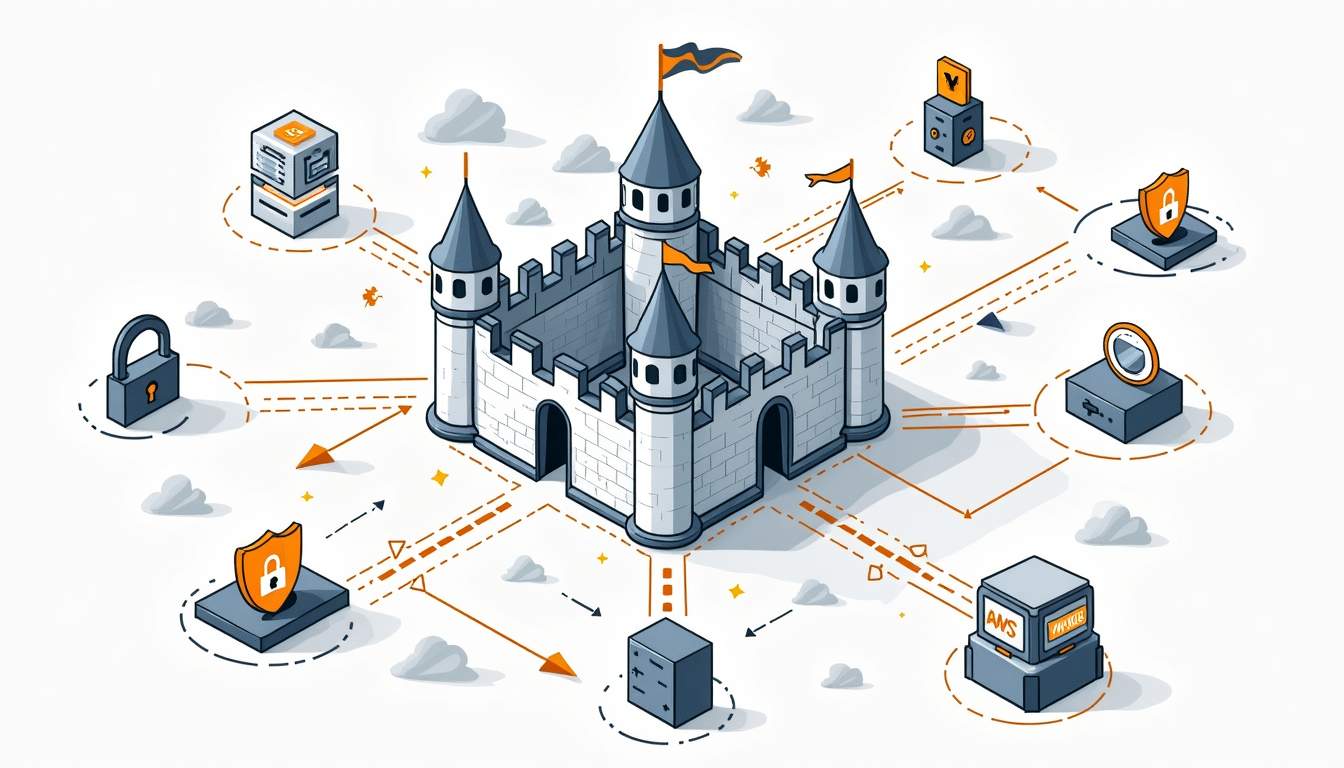
On-Premise vs. Cloud-Based IAM: Security Perspectives
A study involving 45 cybersecurity professionals revealed that 41% believe on-premise IAM solutions are more secure than cloud-based ones. This skepticism often stems from concerns about the complexity of managing dynamic policies and the evolving nature of cloud environments.
However, cloud-native IAM solutions like AWS IAM offer advanced features and integrations that can enhance security when used correctly. The key lies in mastering these tools and continuously adapting policies to the changing landscape. Moreover, organizations leveraging cloud-based IAM can benefit from the scalability and flexibility that these solutions provide, allowing them to respond more swiftly to security incidents and compliance requirements. As businesses increasingly adopt hybrid cloud architectures, the ability to seamlessly integrate IAM across both on-premise and cloud environments becomes paramount, ensuring a unified security posture.
Adaptive Security Policy Management Using Reinforcement Learning
One of the most promising developments in IAM security is the application of reinforcement learning to adaptive policy management. A study published in August 2026 demonstrated that adaptive security policies managed through reinforcement learning achieved a 92% intrusion detection rate, significantly outperforming traditional static policies, which had an 82% detection rate.
This approach uses machine learning to dynamically adjust policies based on observed behaviors and threat patterns, offering a proactive defense mechanism against sophisticated attacks. By continuously learning from new data, these systems can identify anomalies and potential threats in real time, enabling organizations to respond more effectively to incidents. Furthermore, the integration of reinforcement learning with existing IAM frameworks can streamline the process of policy updates, reducing the administrative burden on security teams and allowing them to focus on strategic initiatives rather than routine maintenance.
Common AWS Security Risks Related to IAM
Industry experts at Wiz have identified several common AWS security risks tied to IAM, including identity and access control gaps, data exposure risks, and monitoring blind spots. These risks highlight the necessity of robust IAM policies combined with comprehensive monitoring and auditing practices.
Addressing these challenges requires a multi-layered strategy that includes policy hardening, continuous monitoring, and incident response readiness. Additionally, organizations should consider implementing automated tools that can assist in identifying misconfigurations and enforcing compliance with best practices. Regular training and awareness programs for employees can also play a crucial role in mitigating risks, as human error remains one of the leading causes of security breaches. By fostering a culture of security awareness, organizations can empower their teams to recognize potential threats and adhere to IAM protocols, ultimately strengthening their overall security posture.
Practical Steps to Implement and Maintain Strong IAM Policies
Beyond theory and tools, practical implementation is crucial to mastering AWS IAM policies. Here are actionable steps to help you build and sustain a secure IAM environment.
Regular Audits and Policy Reviews
Consistent auditing is vital to ensure that IAM policies remain aligned with organizational needs and security standards. Automated tools can assist in identifying unused permissions, overly broad access, and policy drift.
By performing regular reviews, organizations can reduce unauthorized access incidents by as much as 60%, according to research.
Segment Access Using Roles and Groups
Organizing users into groups and assigning roles helps simplify permission management. Roles can encapsulate permissions for specific job functions, making it easier to apply the principle of least privilege and adjust access as roles evolve.
This segmentation also facilitates auditing and monitoring by providing clear boundaries around who has access to what.
Implement Multi-Factor Authentication (MFA)
While not directly related to IAM policies themselves, enforcing MFA adds an essential layer of security to user authentication. This reduces the risk of compromised credentials being used to exploit IAM permissions.
Use Managed Policies and Policy Templates
AWS provides managed policies that are maintained and updated by AWS, offering a reliable baseline for common use cases. Additionally, policy templates can serve as starting points for custom policies, ensuring adherence to best practices from the outset.
Conclusion: Elevate Your AWS Security Posture Through Mastery of IAM Policies
Mastering AWS IAM policies is a continuous journey that blends solid foundational principles with cutting-edge innovations. By embracing the principle of least privilege, leveraging dynamic policy variables, automating verification, and adopting adaptive security techniques, organizations can significantly reduce risks associated with insider threats and misconfigurations.

Regular audits, the use of tools like IAM Access Analyzer, and awareness of emerging threats and solutions will help maintain a resilient security posture. As cloud environments grow in complexity, investing in robust IAM policy management is not just best practice—it is essential for safeguarding your digital assets.




Leave a Reply