


TL;DR: DevOps Engineers keep the delivery pipeline moving. Platform Engineers build the shared foundation that makes delivery fast for everyone. They are not competing roles. DevOps Engineers often build and maintain delivery systems for one or a few teams. Platform Engineers build self-service platforms that reduce the need for every team to maintain its own delivery stack.
Use this article to understand the difference, not to pick a side. Most organizations benefit from both when they grow past a few teams and the same infrastructure problems start being solved independently by different groups.
Platform Engineer vs DevOps Engineer at a Glance
| Area | DevOps Engineer | Platform Engineer |
|---|---|---|
| Primary goal | Automate the software delivery pipeline: CI/CD, deployments, monitoring, incident response | Build and maintain an internal developer platform: self-service APIs, tools, infrastructure, and golden paths |
| Scope | Tactical and pipeline-focused: one or a few teams | Product-focused: serves many development teams with a shared platform |
| Core work | CI/CD configuration, infrastructure as code, observability, bridging dev and ops | Platform architecture, API design, developer experience, governance, standardization |
| Success metric | Faster releases, fewer deployment failures, quicker recovery | Developer autonomy, platform adoption, reduced duplication across teams |
| Reports to | Often engineering or SRE leadership | Often platform engineering or a dedicated platform team |
What DevOps Engineers Do
DevOps Engineers work at the intersection of development and operations. The core idea is simple: automate the path from code commit to production and keep it reliable. In practice, this means CI/CD pipelines, infrastructure as code, monitoring and alerting, deployment strategies, and incident management.
The role can vary widely. In some teams, DevOps Engineers are closer to site reliability engineers, deep in system performance, capacity planning, and on-call rotations. In others, they are closer to build and release engineers, owning the tooling that gets code out the door. The constant is delivery velocity and operational stability, not a specific tool or title.
What Platform Engineers Do
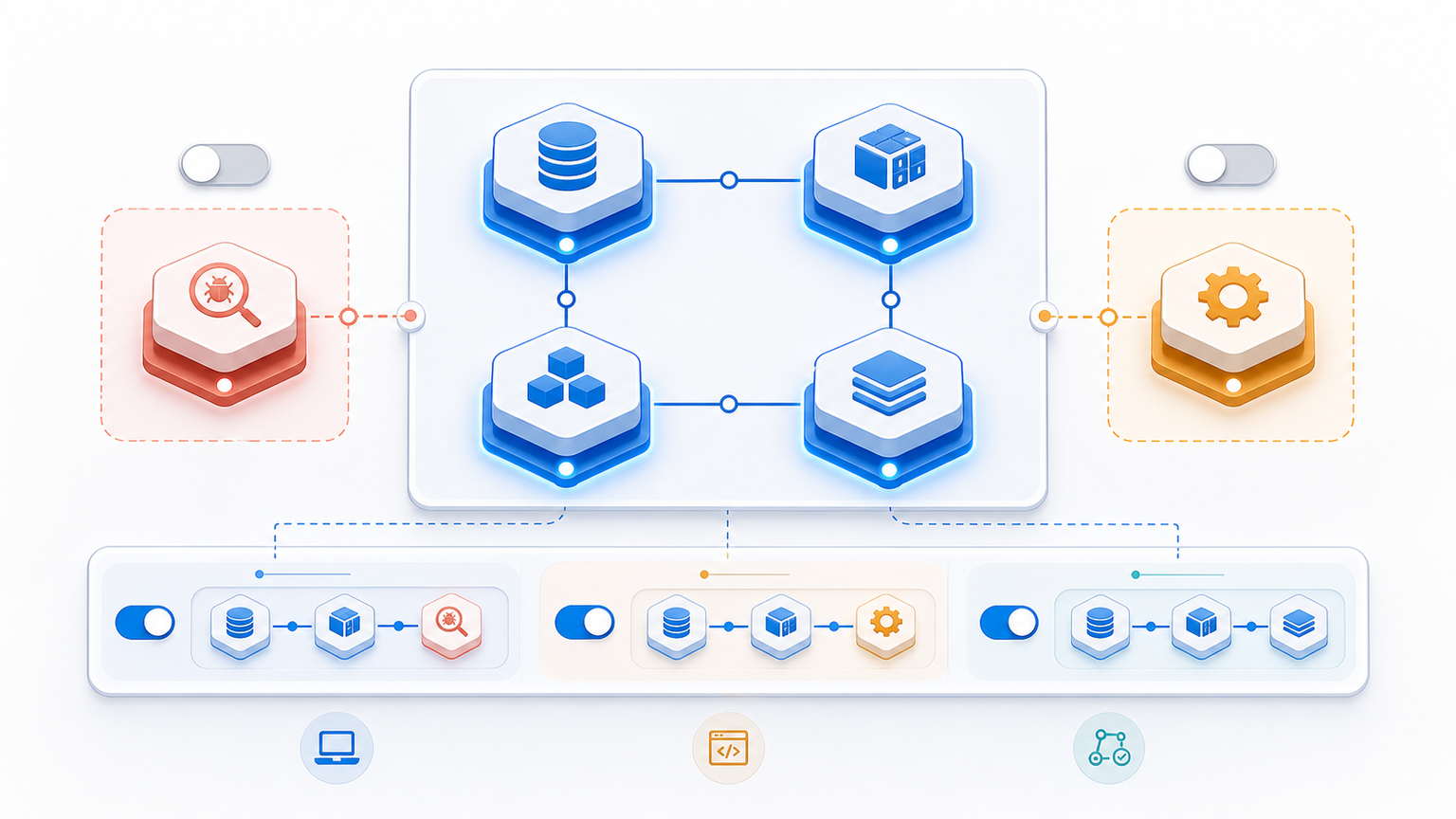
Platform Engineers take a product approach to infrastructure. Instead of solving delivery problems one team at a time, they build shared platforms so that many teams can deliver software without rebuilding the same automation, compliance, and infrastructure patterns from scratch.
Think of it this way: if DevOps Engineers are the mechanics tuning individual race cars, Platform Engineers designed the pit lane that all teams use. They build internal developer portals, self-service infrastructure, standardized deployment pipelines, monitoring stacks, and governance tooling.
The 2023 Puppet State of DevOps Report found that 51% of organizations adopted platform engineering in the previous three years, and 93% considered it a positive step. 68% of adopting organizations reported increased development velocity.
Where the Roles Overlap and Where They Diverge
There is real overlap. Both roles care about automation, infrastructure, reliability, and developer experience. Both use infrastructure as code, CI/CD tools, cloud services, and observability. The difference is in scope and primary customer.
A DevOps Engineer usually serves one team or a small group of teams directly. Their work is often close to the application: helping a specific service deploy faster, debugging a pipeline failure, tuning a monitoring alert.
A Platform Engineer serves tens or hundreds of developers across many teams. Their work is more product-oriented: designing an API that provisions infrastructure, building a dashboard that shows deployment health across the organization, standardizing how secrets are managed so teams stop building their own solutions.
Salary Signals
Market data suggests a consistent premium for platform engineering roles. In Q3 2024, Platform Engineers earned about 18% more than DevOps Engineers in base salary. Minimum averages were roughly $138,600 for Platform Engineers versus $112,900 for DevOps roles. Regional premiums are reported as roughly 23% in Europe and 27% in North America.
These are market signals, not guarantees. Compensation depends on company size, industry, geography, equity structure, and individual negotiation. Use the numbers as a conversation starter, not a precise target.
Related Comparisons
This article is one of several role comparisons on RepoNotes. If you are mapping career paths or making hiring decisions, these may also be useful:
- Cloud Computing vs Software Engineering: Key Differences and Career Insights
- DevOps vs Agile: Understanding the Key Differences and Benefits
- Cloud-Native DevOps: A Roadmap for 2026
FAQ
What is the main difference between a Platform Engineer and a DevOps Engineer?
DevOps Engineers focus on the software delivery pipeline: CI/CD, automation, monitoring, and bridging development with operations. Platform Engineers build internal developer platforms that offer self-service APIs, tools, and infrastructure so that many teams can deliver software without reinventing the same patterns.
Does platform engineering replace DevOps?
No. Platform engineering scales DevOps practices by providing shared building blocks. Most organizations with healthy DevOps practices add platform engineering as a complementary layer, not a replacement. Puppet found 94% of respondents said platform engineering helps them better realize DevOps benefits.
Do Platform Engineers earn more than DevOps Engineers?
Market data suggests yes. In Q3 2024 reports, Platform Engineers earned about 18% more than DevOps Engineers in base salary, with minimum averages of roughly $138,600 versus $112,900. Regional premiums can be higher: about 23% in Europe and 27% in North America. These are market signals, not guarantees for any specific role or company.
When should an organization hire Platform Engineers?
A practical signal is when multiple development teams keep solving the same infrastructure problems independently. When build pipelines, deployment patterns, monitoring stacks, or compliance tooling is being rebuilt per team, a Platform Engineer can create a shared foundation. The investment usually matters more as team and service count grows.
What skills does a Platform Engineer need?
Platform Engineers typically need infrastructure-as-code, cloud services, CI/CD design, API and service design, security and compliance patterns, and strong developer empathy. The role is closer to internal product management with a systems engineering background than a traditional operations role.
Bottom Line
Platform Engineers and DevOps Engineers solve different problems. DevOps Engineers optimize the delivery pipeline for their teams. Platform Engineers build the shared infrastructure that makes delivery pipelines unnecessary to rebuild per team. Most growing engineering organizations need both. The right question is not which role to pick. It is which delivery and infrastructure problems are worth solving once for everyone.



Leave a Reply