


Kubernetes has rapidly evolved into the cornerstone of modern cloud-native infrastructure, powering everything from startups to global enterprises. As container orchestration continues to grow in complexity and scale, understanding Kubernetes jobs becomes essential for developers, DevOps engineers, and IT leaders alike. This guide will explore the fundamentals of Kubernetes jobs, their role in the ecosystem, and the career opportunities they present in today’s booming market.
What Are Kubernetes Jobs?
At its core, a Kubernetes job is a resource object designed to run a finite task to completion. Unlike long-running services or deployments, jobs are meant to execute batch or parallelized workloads that have a clear start and end. Once the job’s task is complete, Kubernetes ensures that the job terminates successfully or retries if necessary.
This makes jobs ideal for a variety of use cases, including data processing, batch computations, backups, and any workload that requires guaranteed completion rather than continuous availability. For instance, in a data analytics pipeline, a job could be employed to process a large dataset, ensuring that the results are computed accurately before moving on to the next stage of analysis. This reliability is crucial in environments where data integrity and accuracy are paramount.
How Kubernetes Jobs Work
Kubernetes jobs create one or more pods to perform the specified task. The job controller monitors these pods and manages retries in case of failure, ensuring that the workload finishes as expected. There are two main types of jobs:
- Non-parallel jobs: Run a single pod to completion.
- Parallel jobs: Run multiple pods simultaneously, useful for large-scale batch processing.
Additionally, CronJobs extend this concept by scheduling jobs to run periodically, automating repetitive tasks such as report generation or system maintenance. This feature is particularly beneficial for organizations that need to perform routine backups or generate daily reports without manual intervention. By leveraging CronJobs, teams can ensure that their workflows are not only efficient but also consistent, reducing the likelihood of human error and freeing up valuable developer time for more strategic initiatives.
Moreover, Kubernetes jobs can be configured with various parameters, such as specifying the number of successful completions required or setting limits on the number of retries. This flexibility allows developers to tailor job executions to meet specific operational needs, whether they are handling a small-scale data transformation or orchestrating a complex multi-step ETL (Extract, Transform, Load) process. As organizations increasingly adopt cloud-native architectures, the ability to manage jobs effectively within Kubernetes becomes an essential skill for DevOps teams, enabling them to harness the full power of container orchestration.
The Growing Importance of Kubernetes Jobs in Modern IT
The adoption of Kubernetes has surged dramatically, with over 7 million clusters deployed worldwide and more than 70% of enterprises embracing container-based deployment models in 2024. This widespread adoption is fueling demand for professionals skilled in Kubernetes, particularly those who understand how to manage jobs effectively within complex cloud-native environments.
Kubernetes Jobs in Edge Computing
Edge computing strategies are gaining traction, with 63% of enterprises adopting edge deployments to bring workloads closer to users. Kubernetes jobs play a critical role here by managing compute tasks on edge nodes efficiently. However, lightweight Kubernetes distributions like k3s and k0s, favored for edge development due to their simplicity, may have trade-offs in security compliance compared to full Kubernetes distributions.
Organizations are increasingly deploying Kubernetes in edge environments, with one in five reporting production use of Kubernetes at the edge. This trend highlights the importance of mastering Kubernetes jobs not only in centralized cloud data centers but also in distributed edge infrastructure.
As the demand for real-time data processing grows, Kubernetes jobs are becoming essential in enabling low-latency applications that can operate seamlessly across various edge devices. For instance, industries such as automotive and healthcare are leveraging Kubernetes to deploy microservices that facilitate real-time analytics and decision-making. This capability allows for immediate responses to critical events, such as monitoring patient vitals or processing data from autonomous vehicles, thus enhancing operational efficiency and safety.
Moreover, the integration of Kubernetes jobs with emerging technologies like IoT and AI is further amplifying their significance. By orchestrating jobs that analyze data streams from IoT devices or manage machine learning workloads at the edge, organizations can derive actionable insights faster than ever before. This synergy not only optimizes resource utilization but also empowers businesses to innovate rapidly, adapting to changing market demands while maintaining a competitive edge in their respective sectors.
Career Opportunities and Market Trends in Kubernetes Jobs
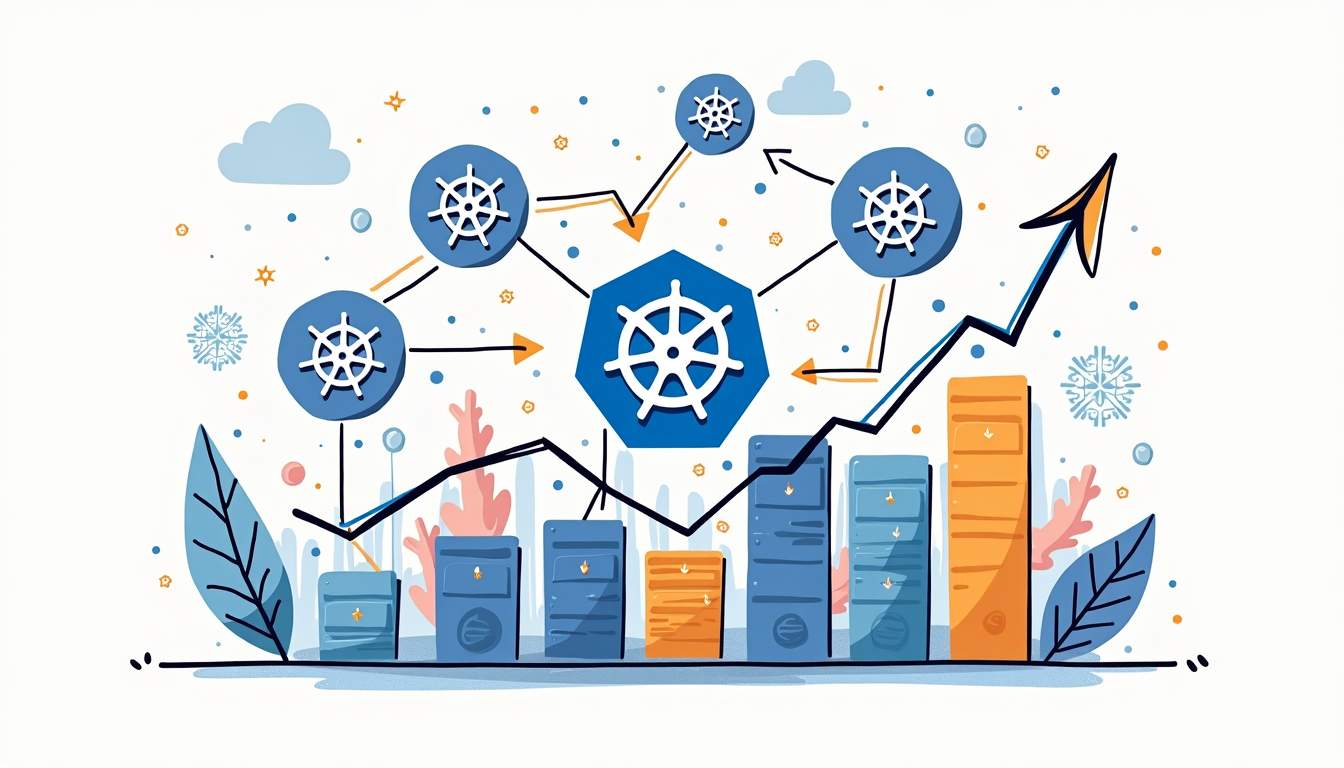
The Kubernetes job market is booming, reflecting the technology’s critical role in enterprise IT strategies. The global Kubernetes market was valued at $2.11 billion in 2024 and is projected to reach $11.8 billion by 2032, growing at a 24% compound annual growth rate. This explosive growth translates into abundant job opportunities for professionals with Kubernetes expertise. As businesses increasingly adopt cloud-native architectures, the demand for Kubernetes specialists is expected to surge, leading to a competitive landscape where skilled professionals can negotiate favorable terms and conditions.
Moreover, the rise of hybrid and multi-cloud environments has further solidified Kubernetes as the go-to orchestration tool. Companies are not only looking for developers and engineers but also for architects and strategists who can design robust Kubernetes infrastructures that align with their long-term business goals. This trend highlights the importance of continuous learning and adaptation in the field, as professionals must stay updated with the latest advancements and best practices in Kubernetes and container orchestration.
Salary and Job Posting Trends
Recent data from the first quarter of 2026 shows a 4% increase in Kubernetes job postings compared to the same period in 2024. Notably, there is a rise in positions offering salaries between $120,000 and $200,000, reflecting the high demand for skilled engineers capable of managing Kubernetes workloads, including jobs and batch processing tasks. This upward trend in salaries is also indicative of the increasing complexity of Kubernetes environments, which require professionals to possess not only technical skills but also a strong understanding of DevOps practices and cloud infrastructure.
Additionally, companies are beginning to offer more comprehensive benefits packages to attract top talent. This includes remote work options, flexible hours, and professional development opportunities, such as certifications in Kubernetes and related technologies. As organizations strive to build diverse and inclusive teams, they are also focusing on creating a supportive work culture that fosters innovation and collaboration, further enhancing the appeal of Kubernetes-related roles.
Executive and Organizational Investment
Executives are increasingly viewing platform engineering roles, which include Kubernetes job management, as career advancement opportunities. According to the Cloud Native Computing Foundation, executives are 1.8 times more likely than other functions to see platform engineering as a promotion. Organizations are investing heavily in upskilling existing staff (63%), engaging consultants (59%), and hiring skilled engineers (52%) to support this critical function. This investment not only helps in retaining talent but also ensures that teams are equipped with the latest skills to tackle emerging challenges in cloud-native environments.
Furthermore, as Kubernetes continues to evolve, organizations are recognizing the need for a strategic approach to their cloud-native journeys. This includes establishing dedicated teams focused on Kubernetes governance, security, and compliance, which are essential for mitigating risks associated with containerized applications. By prioritizing these areas, companies can enhance their operational efficiency and drive innovation, thereby solidifying their competitive edge in the market. The emphasis on Kubernetes also highlights the importance of cross-functional collaboration, as teams from development, operations, and security must work together to maximize the benefits of this powerful technology.
Best Practices for Managing Kubernetes Jobs
Effectively managing Kubernetes jobs requires a blend of technical knowledge and operational discipline. Here are some best practices to consider:
Define Clear Job Specifications
Ensure that job manifests specify resource requests and limits to prevent resource contention. Use labels and annotations to organize and track jobs efficiently.
Implement Robust Retry Policies
Configure backoff limits and failure thresholds to handle transient errors gracefully. This ensures jobs are retried appropriately without overwhelming the cluster.
Monitor Job Status and Logs
Leverage Kubernetes-native tools and third-party monitoring solutions to track job progress and troubleshoot failures quickly. Monitoring is especially critical in environments with high job throughput or complex dependencies.
Secure Job Workloads
Security is paramount, particularly in edge computing scenarios. Use role-based access control (RBAC), network policies, and image scanning to protect job workloads from vulnerabilities and unauthorized access.
Emerging Use Cases and Technologies
Kubernetes jobs are evolving alongside advances in scientific computing, AI, and machine learning. For example, the National Research Platform integrates Kubernetes-based cyberinfrastructure to orchestrate diverse computational resources, from single nodes to GPU clusters, supporting complex research workloads.
Batch Processing for AI and Machine Learning
Kubernetes jobs facilitate scalable batch processing pipelines for training and inference tasks. This flexibility enables researchers and enterprises to efficiently utilize compute resources while maintaining reproducibility and fault tolerance.
Hybrid and Multi-Cloud Deployments
As organizations adopt hybrid cloud strategies, Kubernetes jobs help maintain consistency across environments. Jobs can be scheduled and managed uniformly, whether running on-premises, in public clouds, or at the edge.
Conclusion
Kubernetes jobs are a fundamental building block in the container orchestration landscape, enabling reliable execution of batch and finite workloads. With the Kubernetes market expanding rapidly and enterprise adoption soaring, expertise in managing jobs is becoming increasingly valuable for IT professionals.
Understanding the nuances of job types, deployment environments, and best practices can empower organizations to optimize workload management, enhance security, and capitalize on emerging opportunities in edge computing and scientific research.
For professionals seeking to advance their careers, investing time in mastering Kubernetes jobs and related platform engineering skills aligns well with current market trends and salary growth prospects.




Leave a Reply