


The best DevOps bootcamp depends on what is missing from your current path. Choose TechWorld with Nana when you already work in development, systems, cloud, networking, or QA and want a long project sequence. Choose Clarusway, Simplilearn, or Ironhack when you need scheduled live classes. KodeKloud is the flexible lab-heavy option. Code Platoon is a separate choice for eligible members of the US military community.
A completion certificate alone is weak evidence. Before paying, confirm that the program makes you build and troubleshoot Linux systems, infrastructure as code, containers, a deployment pipeline, cloud resources, and monitoring. You should leave with a repository and a working system that you can explain in an interview.
Short recommendation: Start with a free or low-cost course for two weeks. Buy a full bootcamp only if you need its schedule, feedback, project reviews, or career support to finish the same practical work.
DevOps bootcamps at a glance
Program pages change their prices, cohorts, and discounts often. The comparison below uses details visible on official provider pages on September 17, 2026. Verify the checkout page and cohort date before paying.
| Program | Format and published duration | Best fit | Important limit |
|---|---|---|---|
| TechWorld with Nana DevOps Bootcamp | Self-paced; recommended schedule of about 15 hours per week over 4–6 months | Working developers, system administrators, cloud engineers, network engineers, and QA engineers who want an integrated project path | The provider directs people with no IT background to its beginner course first |
| Clarusway AWS & DevOps | Live online, part-time; 37 weeks with published instruction and lab hours | Learners who want a long AWS foundation plus DevOps cohort, mentoring, teamwork, and career support | The next start date is TBA; internship eligibility and financing terms are conditional |
| Simplilearn AI-Enabled DevOps Engineer Masters Program | Live online and interactive; 6 months | Learners who want a longer cohort with guided labs and IBM/Microsoft learning content | Tuition is location-dependent and the public page may require an advisor or checkout step for the current price |
| Ironhack DevOps & Cloud Computing | Live remote; 9 weeks full-time or 24 weeks part-time on the Portugal page | Learners who want an accelerated fixed-schedule AWS/Azure cloud and DevOps cohort | Tuition, times, financing, and covered certification fees vary by location |
| Code Platoon AI Cloud and DevOps Engineering | Live remote evenings and weekends; 28 weeks | Eligible US military-community learners who want AWS, AI infrastructure, and DevOps training | Limited to veterans, servicemembers, military spouses, and adult military dependents |
| KodeKloud DevOps Learning Path | Self-paced subscription; completion estimate varies with daily study time | Independent learners who value browser labs, skill tests, and flexible pacing | It is a platform path rather than a live cohort with personal career coaching |
How the current programs differ
TechWorld with Nana: a self-paced project path
The TechWorld with Nana DevOps Bootcamp publishes a 4–6 month duration, a recommended 15-hour weekly schedule, and more than 24 projects. Its curriculum connects Linux, Git, build tools, Nexus, Jenkins, Docker, Kubernetes, Helm, AWS, Terraform, Python, Ansible, Prometheus, and Grafana.
The sequence is its main advantage. Students first handle operating-system, version-control, and build tasks, then combine them in pipelines and cloud deployments. The provider says the program is best suited to people who already have an engineering or IT background. People starting from zero are directed to a separate IT beginner course.
Choose it when you can study independently but want one integrated roadmap and a portfolio. Before purchasing, confirm current access terms, support channels, refund terms, and the price shown for your country.
Clarusway: a long AWS and DevOps cohort
Clarusway’s combined AWS & DevOps program publishes a 37-week duration, 441 hours of instruction or video sessions, and 124 hours of labs and projects. The DevOps portion covers Jenkins, Ansible, Terraform, Docker, Kubernetes, Helm, Prometheus, Grafana, and AWS container services. The program also advertises mentoring, teamwork, career support, and a conditional internship for qualifying US and Canadian learners who purchase both modules.
The official page showed a $13,800 list tuition and an $8,970 upfront promotion on September 17, 2026. A ten-payment plan totaled $11,730, while lender examples had separate credit terms and fees. Promotions and financing can change. Ask for a written total cost, next cohort date, refund policy, internship eligibility, and financing disclosure before enrolling.
Simplilearn: a longer live online cohort
Simplilearn describes its AI-Enabled DevOps Engineer Masters Program as a six-month live online program. The current page includes guided labs, project scenarios, IBM content, Microsoft learning material, DevSecOps, and AI-assisted workflow topics.
This format fits learners who want a longer calendar than a short intensive course and prefer scheduled instruction. The program page listed a September 20, 2026 cohort when checked, but cohort dates are temporary. Treat that date as an availability snapshot, not a permanent program feature.
The public page does not present one stable global tuition figure in the main program summary. Request the full price for your country, including tax, financing cost, retake access, and any exam vouchers. Do not compare a monthly payment with another program’s total tuition.
Ironhack: an accelerated live remote option
Ironhack’s Portugal program page publishes two remote schedules: nine weeks full-time or 24 weeks part-time. The curriculum covers Linux, Python, CI/CD, Docker, Kubernetes, Terraform, AWS, Azure, monitoring, and a final automation project. The page showed a €7,500 list price and a €6,250 promotion when checked.
Those facts belong to the Portugal offer. Do not assume another campus uses the same tuition, timezone, financing, or certification coverage. Choose Ironhack when you want a compressed live schedule and can confirm that the local offer fits your calendar. Skip it when you need self-paced access or cannot absorb an intensive weekly load.
Code Platoon: restricted to the US military community
Code Platoon’s AI Cloud and DevOps Engineering program runs live online during evenings and weekends for 28 weeks. The curriculum includes AWS networking and services, Terraform, Ansible, GitHub Actions, Docker, Kubernetes, Prometheus, AWS Bedrock, and SageMaker. The official page listed a November 16, 2026 cohort with applications due September 27, 2026 when checked.
This is not a general-market option. Code Platoon limits eligibility to veterans, servicemembers, military spouses, and adult military dependents. Its page listed $20,000 tuition subject to change. Eligible applicants should verify scholarships, benefits, included exam fees, and total out-of-pocket cost in writing.
KodeKloud: flexible practice through a subscription
KodeKloud’s DevOps Learning Path covers version control, CI/CD, containers, orchestration, automation, interview preparation, and observability. The provider estimates completion from roughly two to seven months depending on study pace and prior experience. Its subscription plans include courses, hands-on labs, mock exams, skill assessments, and practice environments, with features varying by plan.
This is the strongest fit when you learn well without a cohort and want repeated browser-based practice. It is also easier to test before committing to an expensive program. The tradeoff is that a platform subscription does not give you the same personal project review, fixed class schedule, or job-search accountability as a live bootcamp.
Build a complete project rather than collecting isolated lab completions. The DevOps skills guide can help you check whether the path covers the operating skills employers expect.
Lower-cost ways to test the field first
The KodeKloud-authored Ultimate DevOps Bootcamp on Udemy was updated in August 2026 and lists 46 sections, 297 lectures, and 16 hours 50 minutes of video. It covers Linux, networking, application basics, Git, containers, Kubernetes, Terraform, Ansible, and Python. Udemy prices change by account and promotion, so compare the checkout total rather than citing a permanent price.
The Linux Foundation’s LFS162 course is free, self-paced, and introductory. It covers DevOps and SRE concepts, cloud, containers, infrastructure as code, CI/CD, observability, and reliability. The provider lists 10–12 hours of material and 90 days of access. Its prerequisites include intermediate Linux, networking, scripting, security, virtualization, and systems-administration knowledge, so “beginner” here does not mean no technical background.
Use either option to test whether you enjoy terminal work, troubleshooting, and delivery systems. If you cannot finish a small foundation course and project, a more expensive syllabus will not fix the underlying time or motivation problem.
What a DevOps bootcamp should teach
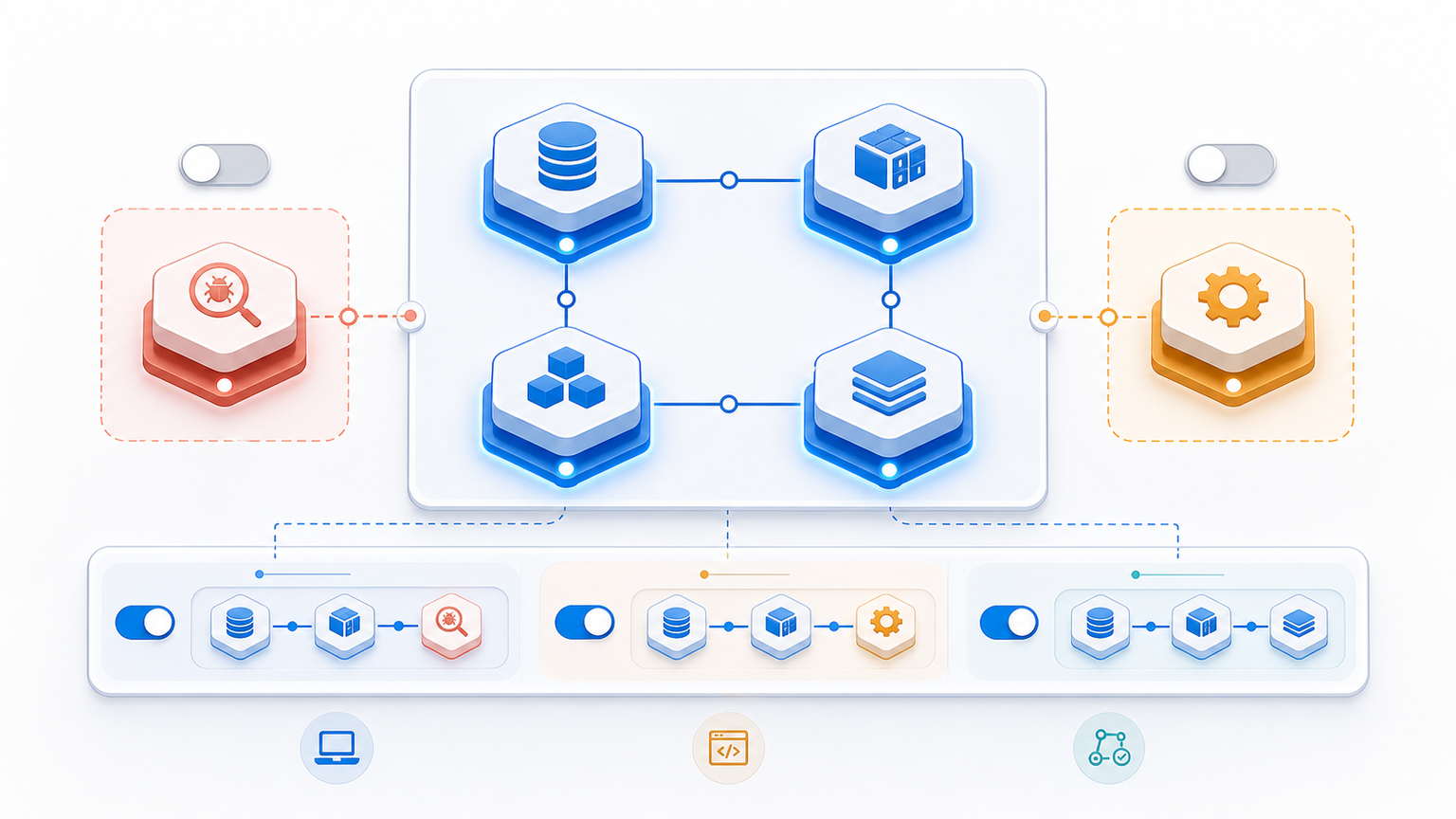
Tool lists are easy to market. A useful program should connect the tools into one delivery system.
| Capability | Minimum practical evidence | Weak substitute |
|---|---|---|
| Linux and networking | Diagnose a service, permissions, DNS, ports, routes, logs, and resource pressure | Watching command demonstrations |
| Version control and collaboration | Use branches, pull requests, reviews, protected branches, and rollback | Uploading finished files to GitHub |
| CI/CD | Build, test, package, scan, deploy, verify, and roll back one versioned artifact | A pipeline that only prints messages |
| Containers and orchestration | Build an image, run it safely, deploy it, inspect failures, and update it | Copying a Dockerfile without debugging it |
| Infrastructure as code | Provision and change a small environment with reviewable Terraform | Memorizing Terraform resource syntax |
| Cloud and identity | Deploy to a cloud account with least-privilege access and a cost boundary | Following console clicks without explaining permissions |
| Observability | Add logs, metrics, a dashboard, an alert, and a post-deployment check | Installing Prometheus without using its signals |
| Portfolio and communication | Explain architecture, tradeoffs, failure modes, costs, and your own contribution | A certificate with no repository or demo |
The learn DevOps from scratch guide gives a foundation sequence you can use to evaluate any syllabus. If a bootcamp jumps directly to Kubernetes while skipping Linux, networking, Git, and application delivery, expect brittle knowledge.
A practical project every program should support
Ask the admissions team whether students complete one end-to-end system that includes all of the following:
- Put a small application in a Git repository with tests and a protected main branch.
- Build a versioned container image in CI.
- Scan the image and dependencies, then publish the artifact to a registry.
- Provision a non-production environment with Terraform.
- Deploy the same artifact through a controlled pipeline.
- Add secrets without storing them in the repository or image.
- Collect logs and metrics, create one useful dashboard, and define an alert.
- Break the deployment, diagnose the failure, and demonstrate rollback.
- Document the architecture, cost boundary, security choices, and operational runbook.
This repository is more useful than a collection of disconnected screenshots. It gives you concrete material for a DevOps resume and for scenario questions in the DevOps interview preparation hub.
How to compare tuition and financing
Compare total cost, not the advertised monthly payment.
| Cost item | Question to ask | Why it matters |
|---|---|---|
| Tuition | What is the total amount including tax and mandatory fees? | A discounted headline may exclude taxes or add-ons |
| Financing | What are the APR, fees, term, and total repayment? | A smaller monthly payment can cost more overall |
| Cloud usage | Are cloud credits included, and what spending limit should students set? | Labs can create separate AWS, Azure, or GCP charges |
| Exams | Are certification exam vouchers included? | “Certification preparation” does not mean the external exam is paid for |
| Support | How long do mentoring, labs, recordings, and community access remain available? | Access can end before you finish the portfolio |
| Refunds | What event starts the refund window, and what usage voids it? | Sales calls and program pages may summarize the policy differently |
| Career services | Which services are guaranteed, and which outcomes are only marketing claims? | Resume support is not a job guarantee |
Do not rely on salary ladders, placement percentages, or “job-ready” labels unless the provider publishes the method behind the claim. Ask for the cohort size, denominator, eligible graduates, time window, geography, job definition, and whether the result was independently audited.
Which option fits your situation?
| Your situation | Best starting route | Why |
|---|---|---|
| No Linux or networking background | Linux Foundation LFS162 plus a Linux/networking foundation before a bootcamp | You need the operating model before a large toolchain |
| Working in development, systems, cloud, networking, or QA | TechWorld with Nana or another project-heavy self-paced path | Your existing context lets you connect the tools faster |
| You need live classes and deadlines | Clarusway or Simplilearn after checking the current cohort and total price | A scheduled cohort supplies external structure |
| You need repeated browser labs on a flexible schedule | KodeKloud | Subscription access supports practice without a fixed cohort |
| You are unsure whether DevOps work suits you | Udemy bootcamp or free LFS162 plus one end-to-end project | You can test the work before taking on a large cost |
| You already know the tools but cannot get interviews | Skip another broad bootcamp and improve portfolio evidence, resume, and interview practice | More introductory content will not solve weak proof of work |
A bootcamp should address a specific constraint. If your problem is missing foundations, buy foundations. If your problem is finishing projects, buy feedback and deadlines. If your problem is presenting experience, use the DevOps job description guide to map your evidence to real responsibilities before paying for another course.
Due diligence before enrollment
1. Verify current availability
Open the official program and checkout pages. Confirm the next cohort, country eligibility, timezone, language, total tuition, and access period. A search result can describe a cohort that has already closed.
2. Inspect the project outputs
Ask to see anonymized examples of repositories, pipelines, infrastructure code, dashboards, runbooks, and capstones. Count what students build and troubleshoot. A long list of product names is not a project curriculum.
3. Confirm who reviews your work
Find out whether feedback comes from an instructor, mentor, automated grader, peers, or nobody. Ask how often reviews happen and whether the reviewer checks architecture and debugging, not only task completion.
4. Test the prerequisites honestly
Try Linux, Git, networking, and scripting exercises before enrollment. If the bootcamp assumes those skills, close the gap first. Paying for an advanced cohort while learning shell basics at the same time creates unnecessary pressure.
5. Audit career claims
Request definitions and written terms for placement rates, guarantees, internships, and hiring partnerships. Treat testimonials as examples, not expected outcomes. Never borrow based on a projected salary.
6. Protect your exit option
Read the cancellation, refund, deferment, and financing contracts before the first class. Save the version you agreed to. Confirm what happens to financing if you withdraw.
Sources
- TechWorld with Nana: DevOps Bootcamp
- Clarusway: AWS & DevOps
- Clarusway: Financing and Tuition
- Simplilearn: AI-Enabled DevOps Engineer Masters Program
- Ironhack: Remote DevOps & Cloud Computing
- Code Platoon: AI Cloud and DevOps Engineering
- KodeKloud: DevOps Learning Path
- KodeKloud: Plans and Pricing
- Udemy: The Ultimate DevOps Bootcamp
- Linux Foundation: Introduction to DevOps and Site Reliability Engineering
FAQ
These answers cover value, prerequisites, duration, job claims, and the project evidence a useful program should produce.
Is a DevOps bootcamp worth it in 2026?
A DevOps bootcamp can be worth paying for when you need a fixed schedule, project review, mentoring, or career support to finish practical work. Test the field with a free or low-cost course first, then pay only if the program closes a specific gap that self-study has not solved.
Can a beginner join a DevOps bootcamp?
Program prerequisites vary. Some courses start with foundations, while others expect Linux, Git, networking, scripting, or cloud experience. Complete a prerequisite assessment and build one small Linux or cloud project before enrolling so you know whether the advertised starting level matches your skills.
How long does a DevOps bootcamp take?
Current programs range from short on-demand courses to three-month live cohorts and four-to-six-month learning paths. Duration matters less than weekly practice and project depth. Ask how many hours you will spend building, debugging, and receiving feedback rather than only watching lessons.
Will a DevOps bootcamp guarantee a job?
No training program can guarantee a suitable job unless the promise is defined in a written contract with clear eligibility and refund terms. Treat placement rates and testimonials as provider claims until you can inspect their cohort size, denominator, time window, geography, job definition, and audit method.
What project should I have after a DevOps bootcamp?
You should be able to show a repository where a tested application is built into a versioned container, deployed through CI/CD to infrastructure created as code, monitored with logs and metrics, and recovered from a failed release. The documentation should explain architecture, identity, cost, security, and rollback choices.

Leave a Reply